
By Erin Pallott
“For in that sleep of death what dreams may come
– Shakespeare’s Hamlet
When we have shuffled off this mortal coil,
Must give us pause: there’s the respect
That makes calamity of so long life.”
In Shakespeare’s most famous soliloquy, Hamlet philosophises on the anguish of life and a fear of death. “This mortal coil” refers to life being full of noise and turmoil. At the time Hamlet was written, outbreaks of the bubonic plague were frequent, which certainly was causing much turmoil in London. Shakespeare was known to be particularly fearful of this disease, understandably so as some of his siblings likely lost their lives to it. It made its way into his works, such as in Romeo and Juliet where Friar Laurence’s message is delayed due to a plague outbreak (not because of the postal service, like in Baz Luhrmann’s adaptation). Recurring outbreaks also caused frequent closures of theatres as authorities tried to limit crowds to prevent the disease from spreading1.
While this may resemble very recent events, infectious disease is no longer the most prominent cause of death across the world, which is a relatively recent development. Throughout history, we have battled malaria, smallpox, measles, influenza, cholera and more. Apart from smallpox, all of these diseases are still serious issues but every year, there are advancements in reducing new cases. Through the development of vaccines, sanitation, and medicine, we have drastically increased our life expectancies in the last 200 years. This has tipped the balance, and now most top causes of death are multifactorial diseases linked to age, lifestyle and genetics, such as heart disease, stroke, Alzheimer’s and cancer2.
This is the topic of Prof Andrew Doig’s first and new book. I was introduced to it when he gave a speech at the recent SBS conference, giving a synopsis of the history of human death. His wonderfully dry humour around such a morbid topic piqued my interest and I picked up a copy the next day.
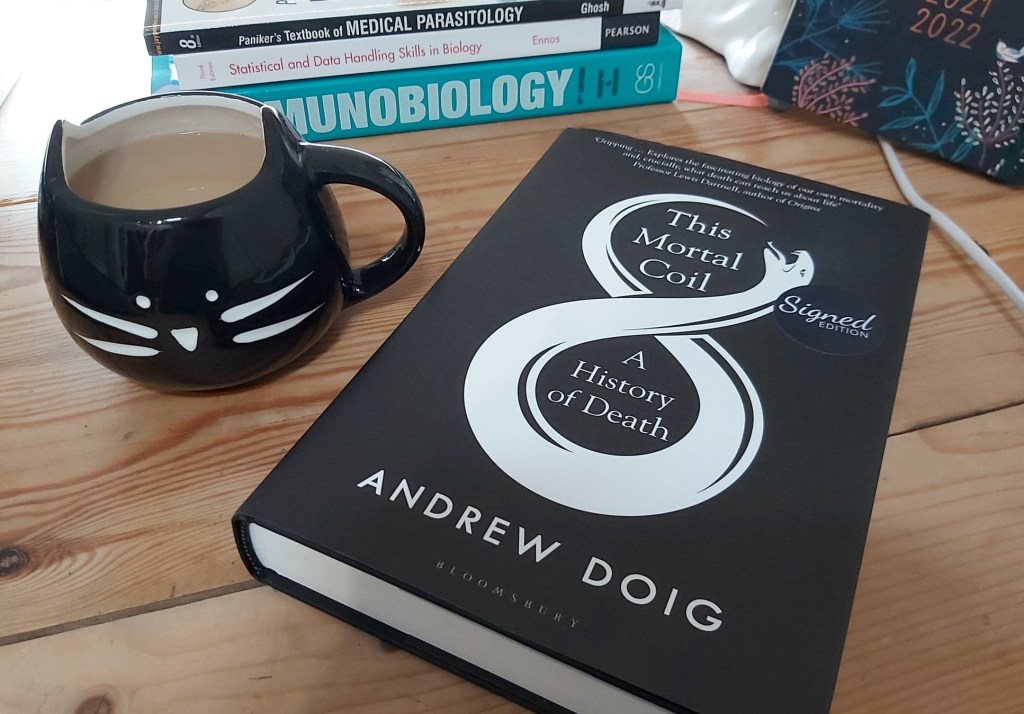
Book Review (Also Posted on Goodreads) – 5/5
In his first book, Professor Doig broadly covers significant causes of human death, stretching from our hunter-gatherer ancestors to the modern day. Starting with how we define and record deaths, he then covers many interesting areas, including infectious disease, famine, genetics and human behaviour. He also explores our successes and challenges in tackling these afflictions, with outlooks on the future of human health.
This is my favourite non-fiction book that I have read in the last few years, for several reasons. The information is accessible to wider readers, with plenty of direction to further reading for more specialist audiences. It is both fast-paced and detailed. When covering technical details, Prof Doig finds a great balance of not leaving questions unanswered and not dragging on in a way which tempts me to skip ahead, with fluid progressions between topics that would otherwise seem unrelated. The healthy doses of deadpan humour in his writing are a major bonus.
It was very easy to binge-read in just a few sittings but I also had frequent pauses to excitedly message my friends “DID YOU KNOW THAT…?”. I had to hold off on that slightly, as they are all interested in reading it themselves after my first few “fun fact” outbursts.
I can easily recommend this book to everyone. I’ve read several books about the history of disease and medicine but much of the well-researched information here was still new to me. It was a perfect break from reading specialist journal articles, while still teaching me so much useful information.
Writing while researching
After reading This Mortal Coil, I spoke to Prof Doig and asked about his experience of writing a book alongside his research, which I thought would be interesting to anyone considering a major side project.
“When I was a teenager, I first encountered the Bills of Mortality. These were records of causes of death in London, published weekly for over two hundred years from the late 16th century. The Bills show that people died for very different reasons in the past, with infectious disease being very common, and heart failure, dementia and cancer seemingly almost unknown.
Wondering why the reasons why we die have changed so much has thus intrigued me for over forty years. Finally, in 2018, I decided to dabble with writing on the topic for a general audience, starting with plague, genetics and life expectancy. Once I had drafts of 10 or so chapters, I was fortunate to be taken on by a literary agent, Caroline Hardman, who found a publishing deal for me with Bloomsbury. Separate deals for an audio version and translations in eight languages followed.
Being able to write about more-or-less anything that took my interest was a surprisingly enjoyable experience. Of course, it took many hours but this was mostly in the form of switching my leisure time reading to a vast range of relevant subjects, with occasional bursts of writing where I would pour out a chunk of text that I had been mulling over in my head. Eventually, I had 150,000 words, later trimmed to back to100,000, thanks to the Bloomsbury team who played a big part in editing and shaping the final text.
Getting a book published is extremely competitive – an agent like Caroline will take on only about 1 in 200 submissions and she still needed to find a deal with a publisher. Even then, few books will have large sales. But if you have something original and important to say, and you are the right person to say it, by all means, give it a go.”
– Professor Andrew Doig
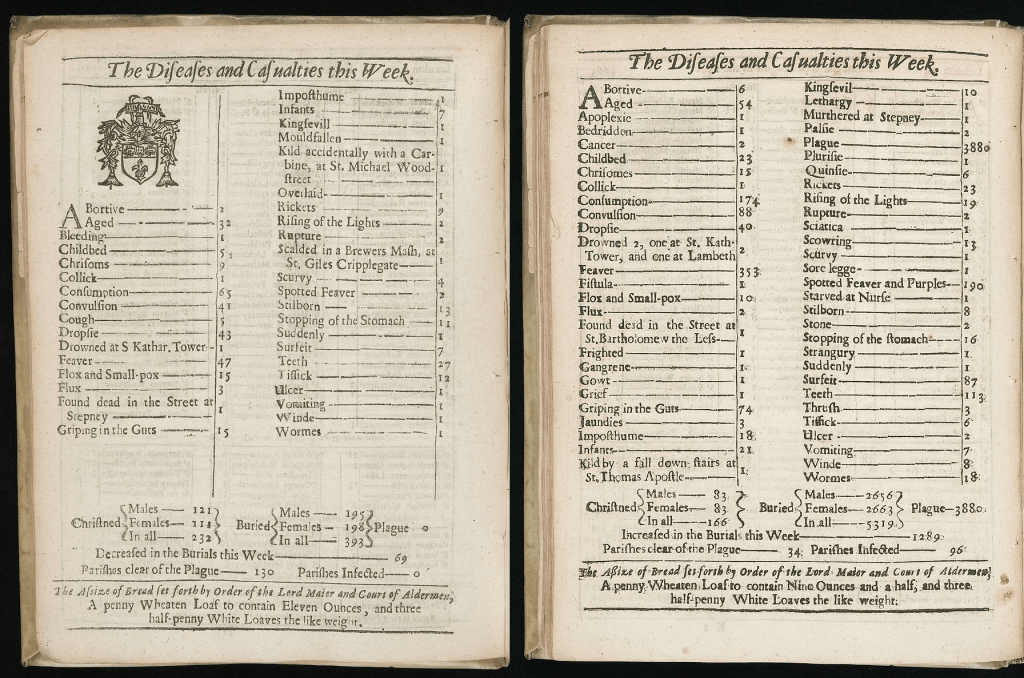
Both images from Wellcome Images, CC by 4.0, via Wikimedia Commons.
Copies of This Mortal Coil can be found in Blackwell’s. Prof Doig will be speaking at the York Festival of Ideas this weekend (June 11th) and will be delivering a talk at the local Blackwell’s towards the end of the year (Nov 17th), which gives you plenty of time to get a copy and finish it (event page pending).
We have more authors in our faculty, particularly Prof Matthew Cobb and Prof Daniel Davis (sadly relocating to Imperial soon), who have both published several books on a range of topics. Their most recent publications, The Idea of the Brain (Matthew Cobb) and The Secret Body (Daniel Davis), have received fantastic reviews, and both are up next for me to read.
Discover more from Research Hive
Subscribe to get the latest posts sent to your email.
 Research Hive