
Author: Cherene de Bruyn // Editor: Oliver Hartley
Cover Photo by Max Shilov on Unsplash
I’ve been sitting in lecture halls and standing at the front of them since 2010. I’ve been a student, a tutor, a teaching assistant, and even a student‑lecturer. Four degrees, two countries, countless classrooms. So, you’d think, as a PGR, I would have a solid grasp of what teaching is.
But when I finally sat down to prepare my Associate Fellowship of the Higher Education Academy (AFHEA) application, I realised something uncomfortable: I had never actually intentionally thought (or been asked to think) about teaching. Not properly. And certainly not critically.
Like most, I assumed that years of being taught automatically translated into knowing how to teach. I assumed that what I had experienced was “how teaching works.” I assumed that lecturers, and by extension, I, understood what students needed and how to convey it to them. As such, I prepared for lectures based on what I thought I was meant to do.
AFHEA showed me how many of those assumptions were wrong. And that’s when I realised: the AFHEA is less about the final certificate and more about a structured opportunity to think about teaching.
Teaching Assumptions
With PowerPoint and Artificial Intelligence, drafting and compiling content for teaching is now much easier than before. However, this expedience comes at a cost. These tools, while powerful and a useful aid, can further amplify student disengagement with lectures and teaching content. Students, on the other hand, can also come to class with generated summaries and notes on readings without having to read the texts themselves. This convenience adds to the gap that exists between the lecturer and the student. It creates a mismatch in the expectations of students and lecturers, makes learning passive, limits engagement and interaction and can also lead to “technostress” for both student and lecturer. Through the AFHEA program PGRs and Early Career Researchers can bridge this gap by developing skills – mapped to the UK Professional Standards Framework (UKPSF) – to support learning in higher education.
Most PGRs hear about AFHEA as a quick credential: something free, something useful for the CV, and something to “get done.” But I have seen the benefits of completing the AFHEA process myself. Before, when I walked into the lecture, I felt unprepared, unsure, or even slightly fake. Having completed the AFHEA, I now have a clearer sense of what my role as a lecturer is. This shift is in part due to structured teaching in pedagogy, but mostly it’s from reflective practice on my own experience, assumptions and expectations.
If anything, I have learned that regardless of students’ preparedness, it is up to the lecturer to lead the sessions, ensuring the students leave the lecture hall with conceptual understanding, curiosity and depth of the topic. Through the AFHEA training, you are taught how to deliver and communicate information interactively to students and develop lectures grounded in real-world examples through evidence-based teaching methods. Key, however, is considering how and when to use these skills and continuously evaluating your approach and style. Through this, you stop teaching on autopilot and start teaching with intention, adding value to the student’s experience.
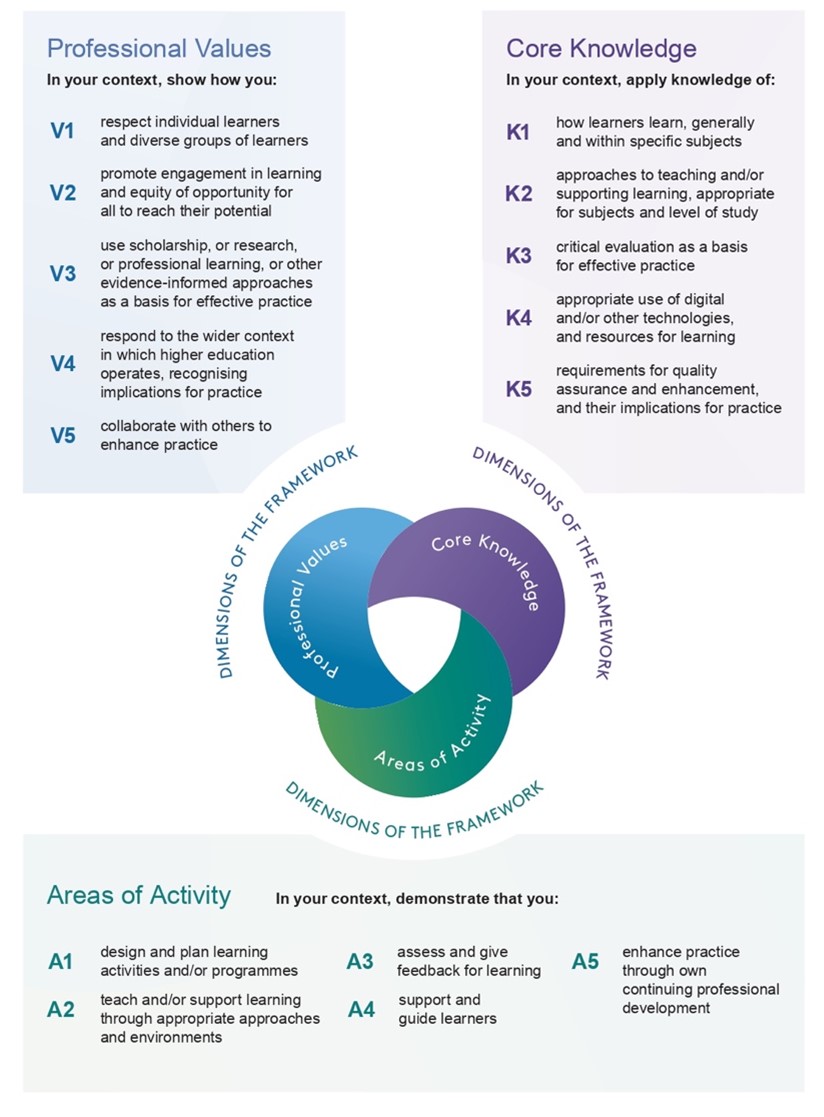
A Strategy for Thinking About Teaching
Doctoral research is a balancing act: maintain steady study progress, conduct high-impact research in an already competitive sphere, but don’t forget to develop into a well-rounded young academic. While departmental culture or supervisors will push for novel research (helping the first parts of this act), the nurturing of rich teaching pedagogies in PGRs slumps silently behind (important for the last part). So, while citation counts, grant applications and conference presentations dominate PGR activity daily, opportunities for pedagogical development like taking part in undergraduate teaching often stay on the back burner to be dealt with at a future date. This means that for PGRs who want to follow a teaching career alongside research, developing these skills often has to be done by fitting it around everything else.
On top of this, the conditions of higher education have shifted, along with students’ attention. Traditional means of student engagement, including over-reliance on traditional formats (like slide decks or whiteboards), which still dominate lecturing, just don’t cut it anymore. It remains the responsibility of the lecturer to ensure students leave the session more informed and well-rounded. Teaching under these conditions and expectations requires intentional design and planning.
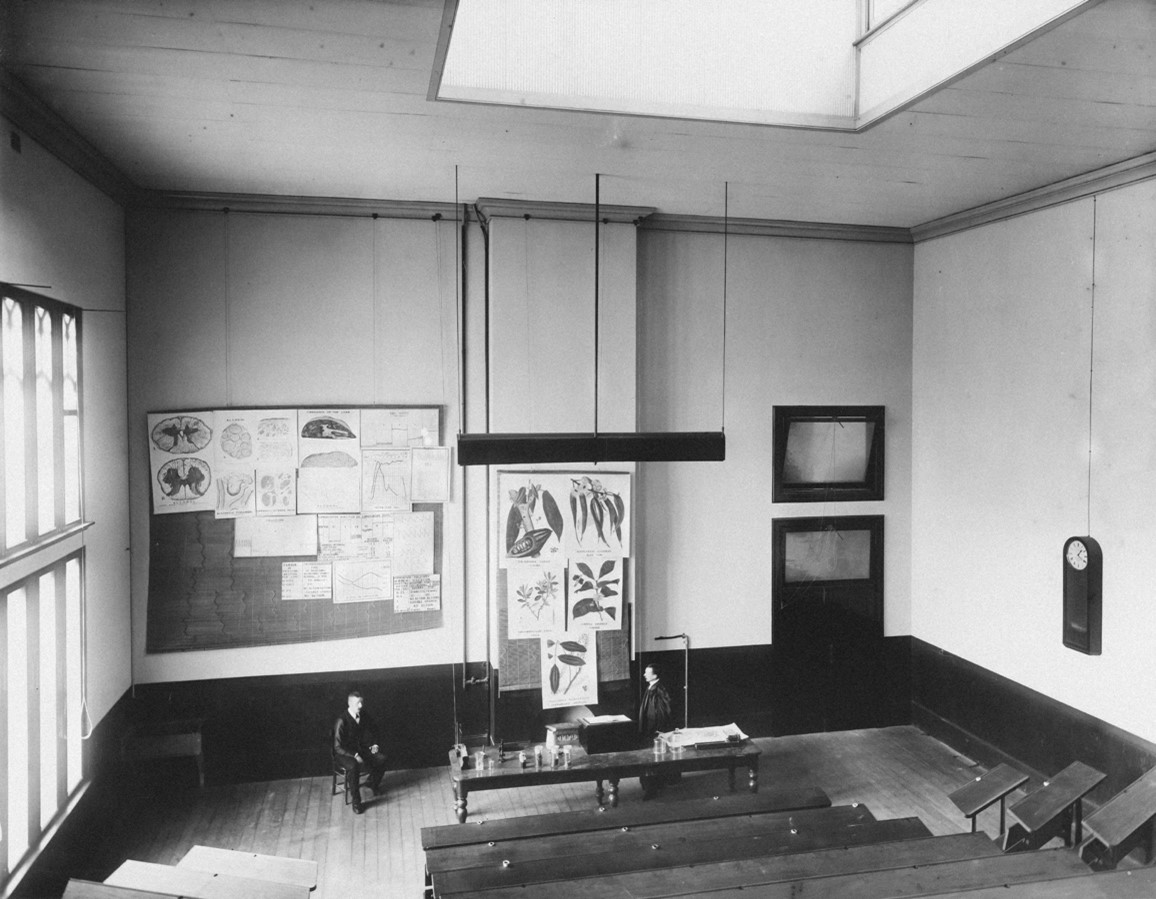
The AFHEA forces PGRs to think about these challenges early on. This means that PGRs are encouraged to develop teaching strategies to bridge the gap between student expectations, institutional objectives and broader teaching standards. It also, consequently, allows for early reflection on teaching biases and assumptions, and the duality between content mastery and intellectual development of the student. Critical skills PGRs would otherwise only be introduced to far too late in their development as educators. By working through an AFHEA program, participants are required to confront these ambiguities and biases directly. While the requirements of the AFHEA, and following tiers, can feel like bureaucratic hurdles, viewed as small steps on the path to developing the craft of teaching, they provide a scaffolding that PGRs can climb to become well-rounded academics. And the building blocks follow a simple strategy. And if they feel familiar, it’s because the process is similar to the approaches we take when thinking and refining our own research:
- Examine your assumptions
- We have all been (or are still) in students’ shoes. We have absorbed ideas and assumptions about by whom and how teaching should be done. To understand your role in the lecture hall and to have a more meaningful impact, you need to identify, examine, and question the origin of these assumptions.
- Identify a teaching problem the way you’d identify a research problem
- Figure out what works and what doesn’t. Refer back to previous lectures you have done, and identify what you did and what sources you used. Using previous lectures as references, remember how students reacted (or didn’t), and what things seemed to motivate participation.
- Gather evidence from your own practice
- As part of this, start gathering feedback from lectures. Ask students to complete short surveys in the last 5 minutes of the class. Additionally, maybe ask a colleague or fellow PGR to sit in the lecture. They can provide more constructive and even more specific feedback.
- Experiment with small changes
- From the feedback and your own review, start implementing small changes. Maybe change the venue, prepare handouts, or add even quizzes to your slides. Key here is to adapt, test what works, if it doesn’t, try the next thing.
- Reflect on the outcome
- Ask for a second round of feedback from students after each small change. Use that to figure out what works for your teaching style, subject, discipline and importantly, the students.
- Articulate your teaching philosophy
- Based on these steps, formulate what works, what you should keep, and why. Write down what you want to get out of the lecture, and what you hope students develop. By doing this, you don’t just teach, but you also progress to start thinking about teaching.
Why This Approach Matters for PGRs
The surprising thing is, PGRs already know how to think critically; it’s a foundational skill of doctoral research. What AFHEA does is invite you to apply that same mindset to teaching. PGRs will at one point start developing their own methods for critical thinking and engagement. Teaching by extension is just a public version of that.
The AFHEA creates a small but meaningful space in which PGRs can confidently develop their own models and approaches to teaching, enabling them to experiment with structure, frameworks and tools. The AFHEA doesn’t require mastery or innovation from participants. Instead, it requires limited teaching responsibilities, a short reflection of teaching experience paired with relevant pedagogical literature. Participants can draw on a range of evidence to demonstrate teaching, including lesson plans, courses attended, as well as students or mentors’ feedback. As an entry point into teaching accreditation, this modesty is a quiet strength. The submission of these items suggests that the focus is on development, targeting competence and awareness rather than expert‑level knowledge or extensive prior experience.
If pursued, PGRs can become more confident in their teaching and communication abilities while simultaneously improving the overall teaching quality of their lectures. Something both institutions and students would appreciate. Academic and teaching careers are not insulated from technological development. A better and more resilient future for higher education will depend on educators who can develop and integrate critical thinking and peer development with technology in a creative way. As such, PGRs ability to design sessions, explain complex ideas, and reflect on outcomes in a more meaningful way will most likely make them stand out in the teaching space.
As such I would like to think that the AFHEA paired with doctoral development, could contribute to:
Better Researcher + Better Lecturer = More Well-Rounded Academic
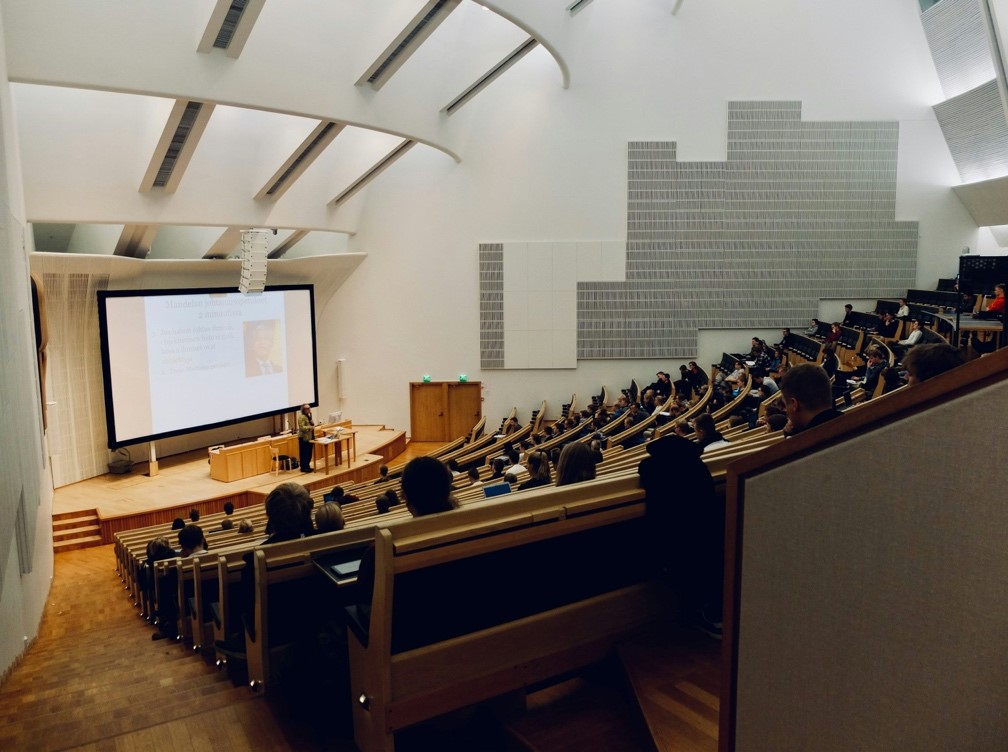
Depending on your goals and where you aim to go, the AFHEA will be beneficial in different ways. For those looking to stay within the UK, where teaching portfolios and evidence of pedagogical training are needed, the AFHEA will carry weight. It will show that the candidate understands the fundamentals of teaching and supporting learning in higher education and that they are up to date with current professional standards. For those considering academic teaching positions outside the UK, while the AFHEA may not directly improve hiring prospects because of differing local frameworks in place for teaching, the value of the AFHEA does not solely lie in the certificate itself (although it is nice to have).
It is also worth being aware that the training is general and does not cater to specific disciplines. Informing teaching practices and styles based on subject area is the applicant’s (and lecturers’) responsibility. Additionally, while juggling other doctoral responsibilities and worries, many PGRs might be uncertain whether they want to stay in academia. Personally, I think the skills and knowledge that the process provides, such as the ability to reflect and the development of lessons and content through evidence-based examples, provide transferable skills (e.g. training, facilitation or leadership) into many jobs both within and outside of academia.
At the end of the day, PGRs should not complete the AFHEA because it is free (though nice) or because they were told it would look good on a CV. Complete the program if teaching might become serious as part of your intellectual life, and use it not only to become a good educator but also a critical thinker. In my opinion the AFHEA is definitely a good place to start. But consider this: the AFHEA isn’t a badge. It’s a mirror.
About the Author
Cherene de Bruyn is originally from South Africa and a PGR at Liverpool John Moores University, in the School of Pharmacy and Biomolecular Sciences and the Forensic Research Institute in the UK. With a background in archaeology and physical anthropology, her current research focuses on clandestine grave detection using forensic ecology and remote sensing. You can follow her research on LinkedIn. She also dives into all things PhD life and productivity on her Substack called BruynChild (pronounced brainchild).
Discover more from Research Hive
Subscribe to get the latest posts sent to your email.
 Research Hive