
The winner of the Science Comms Essay Competition for the Doctoral Academy Graduate Society (DAGS) conference was announced last month as Natasha Motsi for her article on ‘Why Manchester for My Research’. We caught up with Natasha and asked her a few questions about her time in Manchester.

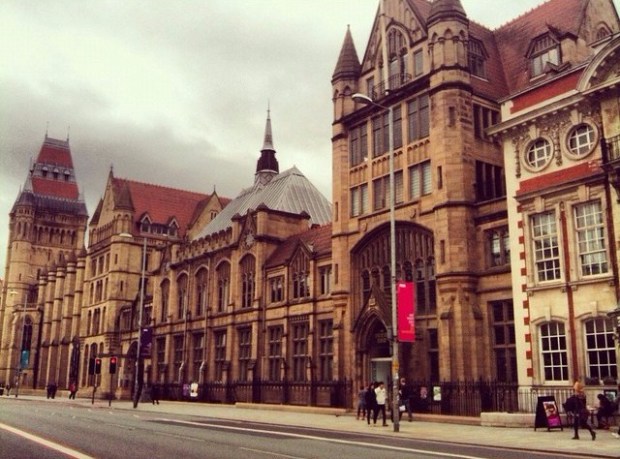
Oxford Road in the morning light
Following one year of an MSc in Medical Microbiology at The University of Manchester, I took a job in industry. I knew I wanted a career in research but took the year out to experience industry while applying for funding. My aim was to return to the laboratory that cemented my passion for research, The Manchester Fungal Infection Group, MFIG for short.
The spark that ignited my passion and interest for progressing knowledge in disease and host can be traced down to my childhood. I grew up in Zimbabwe, a country in Southern Africa where there is a high prevalence of AIDs and communicable diseases. Opportunistic microbial infections therefore pose a great threat to the people of Zimbabwe. This has been an enormous driving for me to carry out world-changing, infectious disease research ever since.
As the name suggests, MFIG is a research group dedicated to studying fungal-host interactions, including the fungal pathogenicity and host response. Fungal diseases by the environmental pathogen Aspergillus fumigatus are of extreme importance, but this is not reflected in the funding or research efforts directed towards these diseases in comparison to bacterial or viral infections. I appreciated the importance of the research at MFIG, a well-equipped centre with cutting edge technology, reputable researchers, brilliant collaborations and a strong interdisciplinary approach to research – I had to be a part of it!
Of course it’s of no surprise that Manchester is a trailblazer in A. fumigatus disease research and in setting up a dedicated research centre. Manchester has always been at the forefront of impactful, translational, world-changing research. In addition to this, Manchester already had the National Aspergillosis Centre, The Mycology Reference Centre Manchester and a number of spinout companies started by researchers and clinicians. So, it was only fitting that Manchester had recognised the importance of this research area.
Here I am now, back at MFIG, collaborating with mycologists, clinicians, immunologists and mathematicians at Imperial College London. That’s why I chose Manchester, because they recognise the areas that are crucial for research which will help everyone the world over. Research at Manchester is not confined within the walls of one lab group or the university. Research at Manchester allows and encourages you to be a world-changer, to interact with people in other disciplines. Research at Manchester implores you to ask questions that no one else asks; to think outside the figurative box.
Research at Manchester allows me to follow my passion with the confidence that the initial driver for my passion, progressing knowledge in disease and the host, is the same thing that drives me every morning. I am fortunate that I have the opportunity to address this issue every day and I am able to see the potential impact that this research has.
Why Manchester for my research? I can confidently say I wouldn’t get this unique combination anywhere else.
Discover more from Research Hive
Subscribe to get the latest posts sent to your email.
 Research Hive