
We’re stressed; things aren’t working out as planned. The idea of spending those few free hours of your time and energy volunteering for committees, events and activities seems silly. I’m going to convince you otherwise.
Some vocab that you’ve probably heard of: “Social Responsibility” is an obligation to act for the benefit of society at large. “Outreach” is an activity of providing services to any populations who might not otherwise have access to those services. “Widening Participation” is an attempt to increase not only the numbers of young people entering higher education, but also the proportion from under-represented groups (those from lower income families, people with disabilities and some ethnic minorities). “Public engagement” describes the involvement of specialists listening to, developing their understanding of, and interacting with, non-specialists. “Green Impact” cuts carbon and looks towards a more sustainable environment in the workplace.
Why does any PhD student bother?
Suddenly people are saying hello to you in the hallway: Getting involved is a way of meeting people in your office, division, school, faculty, and at UoM. When you need any sort of help – be it PhD or other, you may have met someone who can.
That Prof never responded to my email: Plenty of award-winning/Nature-publishing top Profs and their groups engage in social responsibility. Attending events where they are gives you a chance to show your involvement, chat with them, and represent the university.
Grants: Grant applications now ask for a comment on how your work and team will engage in social responsibility, the public and outreach, especially in the many cases that public money has supplied the grant.
Skillz: By creating workshops, stands, and running events, you gain lots of CV-worthy skillz, that a pipette can’t give you. From being creative, organising, working as a team, describing your work to non-specialists, to answering any sort of question from the public, you demonstrate a number of skills (skillz) that are worthy of any career – within academia (leading a group, writing lay abstracts, teaching), and outside academia (team work, organisation, communication, initiative).
Actually, this IS cool: Many PhD days come where you’ll lose that 1st year enthusiasm. When you’re speaking about your work, answering questions and highlighting the impact of your work on the world, you convince yourself alongside everyone else that your work has meaning. This can be really great when you’re bombarded in analyses that keep breaking/failing/corrupting/exploding.
But I haven’t hoola-hooped since I was 9: A great reason to do it is because it’s fun. Recently one of the authors had to hoola-hoop (DNA structure? Benzene ring? Artery? Physics?) against a primary school student. Said primary school student won, but if they need to hoola-hoop in a formal setting (pub after work, their viva, etc.) they have practised.
Inspiration to students with more to deal with than us: some students come from tougher backgrounds. We don’t need to tell you all, but University allows us to dream big and have a standing chance in the fight to careers of interest. We want to inspire students by showing them that they can do it and it is worth it.
Stand up for people like you: International students, UK students, female students, religious students, what defines you and others like you? It is HARD to get to here, how did you do it? We are lucky to be here especially when you think of the small percentages of people who get through interviews for funding. Show students and the public from different places and backgrounds that it can be done.
You learn top presentation skills by working with kids: In seminars, people are polite. They will keep their eyes on you or nod politely even when you are boring. In outreach, you won’t keep their attention by telling them about the fact you changed your p-value of 5×10-12 for multiple comparisons to a corrected p-value of 5×10⁻⁹… Zzz. I can now say that I am able to teach 10 year olds heritability, a complex topic, using the game top trumps. I wish my undergrad lecturer did that. You learn to explain your work in new ways for any audience and you become confident talking up in front of a room of people, because you’ll be more comfortable there.
I know what you’re thinking, “How do I get involved?:
Division and School Level: Check your emails for communications about getting involved in in-house activities and find out now who that contact is for you.
Division of Pharmacy and Optometry: Sally Freeman sally.freeman@manchester.ac.uk
School of Health Sciences: David Allison david.allison@manchester.ac.uk


Division of Pharmacy & Optometry: Primary Schools in Pharmacy and Secondary School Workshops
Faculty-Level: Abbie and the doctoral academy for FBMH send out an email every month with different events looking for PhD students to get involved in.
doctoralacademy@manchester.ac.uk
http://www.socialresponsibility.manchester.ac.uk/
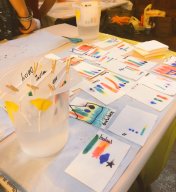
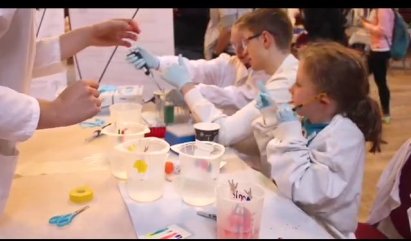
Hooper Lab Group at Brain Box for Manchester Day at Manchester Town Hall


Tirella Group outreach activities: Michael Smith Building and Manchester Museum
University Level; Widening Participation: the university have a whole initiative for PhD students to run workshops and give talks about their PhD topic, for secondary school students whose parents didn’t attend university or are on the government free lunch scheme. After a short interview, the WP team send emails to you with dates they need PhD students to present and you do only what you can. It’s a great scheme as it works around your PhD and they sort everything from training, room bookings, all the equipment and stationary your need for your activities.
https://www.manchester.ac.uk/discover/social-responsibility/widening-participation/
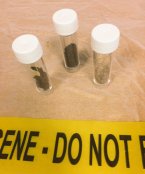
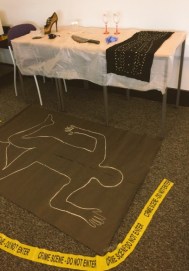
Widening Participation: Gateways Workshops – Crime Science Genetics
City-level: There are plenty of sciences days, festivals, etc., around Manchester and the museums that are easy to get involved in and there are many University pots of funding and grants to set you up.
http://www.engagement.manchester.ac.uk/


Division of Pharmacy and Optometry – European City of Science 2016: Bench to Beside Cancer Tour
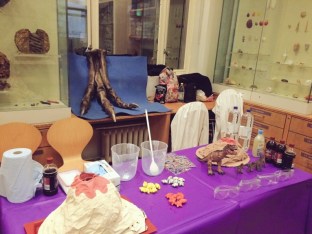
Megan Uttley’s Stand – Inflammation and Wound Healing in Science Spectacular at Manchester Museum
Green Impact and the environment: committees are running in different divisions and schools to aid in recycling of waste, turning off computers and lights, walking and step challenges, and much more. Get involved when you can!
Division of Pharmacy and Optometry: Annalisa Tirella annalisa.tirella@manchester.ac.uk
http://www.sustainability.manchester.ac.uk/get-involved/staff/greenimpact/
Authors: Kathryn McGurk, Emma Williams and Megan Uttley for the team for social responsibility and the environment (thanks to David Allison and Annalisa Tirella).
Discover more from Research Hive
Subscribe to get the latest posts sent to your email.
 Research Hive
Fantastic advert for Social Responsibility!
LikeLike