Author: Alex Bennett
Parasitic worms are a particularly gruesome infection, and fortunately for much of the world’s population, they are largely things of the past. Yet, even a few hundred years ago worm infections were universal – Richard III, the king of England, suffered from a roundworm infection. Worms have been omnipresent among animals for hundreds of thousands of years (parasitic worm infections have even been found in fossilised poo from dinosaurs), and the very intimate relationship between parasite and host has led us to evolve remarkable adaptations to accommodate our unsolicited companions.
A combination of improved sanitation, improved infrastructure and developed healthcare systems has been wondrously effective at virtually eliminating worm infections in the first world. Concurrently, we have seen a sharp rise in the incidence of autoimmune and allergic conditions. Allergy UK state that allergy is the most common chronic disease in Europe, and that staggeringly, hayfever affects up to 30% of adults and 40% of children. It was only in the early 19th century that hayfever was carefully outlined and at that time was considered a highly unusual disease. By the end of the 19th century, however, it was commonplace across Europe and America, and now affects almost half of children to some degree.
The increase in allergic diseases puzzled scientists for some time, and the link to parasitic infections wasn’t realised immediately, until the chronic nature of parasitic infections was considered. A parasite lives inside its host for almost its entire life but doesn’t want to make its host ill or in any sense disabled, as this would limit the hosts ability to provide nutrients for itself (and in turn, for the parasite). Parasites have therefore developed very shrewd mechanisms to dampen host immune systems, allowing them to fly below the radar, as the host continues blissfully unaware and largely asymptomatic.

In 1989 a bright spark put forward the idea that infection protects from allergic disease, and this developed into the infamous ‘hygiene hypothesis’. The hygiene hypothesis has developed a lot since it was first proposed, and branched into a few more nuanced ideas, but essentially it suggests that in the many thousands of years animals have been suffering from parasitic infections, their immune systems have learned to expect these infections, and are already prepared to respond to them. In recent times we’ve begun to get rid of these infections, but our immune system still ‘wants’ to respond to something, and this often manifests as inappropriate reactions to harmless substances such as pollen, food or material shed from our pets’ fur. This has led to people to wonder if our bodies are ready to be rid of their wriggly companions.
We got rid of worms for good reasons: there’s a link between worm infections in children, poor performance at school as well as stunted growth, and worms can lead to malnutrition and anaemia. However, scientists have begun looking to try and get the best of both worlds by asking: is there a way to get the immune controlling effects of parasite infections, without the worms themselves? It seems like the answer might be yes. Research into immune suppression by parasites has become a very active area of research, and the hope is that by understanding these mechanisms we can develop much more effective medicines for treating allergic and autoimmune disease. It seems that despite our aversion to parasitic worms, they may yet help us maintain a healthy relationship with our own bodies.
I caught up with Adefunke Ogunkanbi, a final year PhD study from Jo Pennock’s lab, who has been investigating how a particular type of parasitic worm, ‘Trichuris’ regulates the immune system of its’ host:
Could you introduce what you are working on, some of the background and the ideas that have shaped your area of research.
The main question of my PhD is to find out what the mechanism is that T.muris is using to enhance survival in the host.
So the human infective worm is Trichuris trichura and we are using a mouse model Trichuris muris to represent it. We know that in endemic regions where the human infective worm is prevalent, the worm can survive in the host for a long time, up to like 10 years without causing damage to the host, so why are the worms surviving in the host for such a long time?
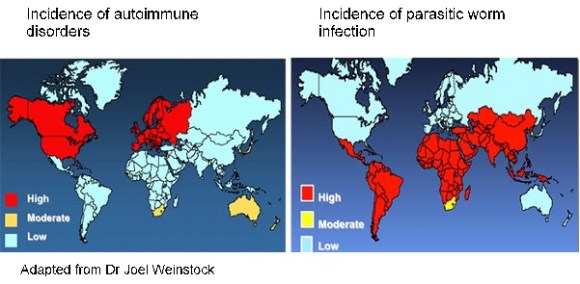
Worms thrive in environments with low levels of hygiene and sanitation. So, in western regions where the worms aren’t as prevalent there is a higher incidence of asthma, arthritis and a lot of inflammatory disorders.
There may be a negative correlation between worm infection and allergic or inflammatory diseases. So, in areas where we have these worm infections we have little or no allergy or inflammatory disorders. Whereas in regions where worm infections are uncommon the incidence of these disorders rises, which we think results from the absence of worms.

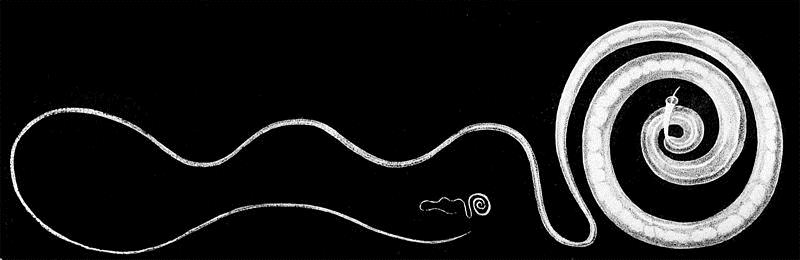
A picture of Trichuris, the worm that Adefunke works with in Jo Pennock’s lab. The worm is shown both magnified and at real size.
And what is it that you are trying to investigate?
We want to investigate what is responsible for this, is the worm trying to modulate immune responses that then downregulates such disorders?
We have been trying to look at how these worms modulate host immune responses to supress inflammation. We knew before I started that the worm makes its own version of one of the most important regulatory messengers in the immune system.
So, we’re making progress. We know that the worm actually downregulates the signals which are responsible for inflammation. I have shown in my experiments that the worm can supress production of particular signalling molecules. The fun bit is that we’ve been able to show the worm’s messenger actually behaves the same way as the human version. The mammalian messenger is produced and needs to be activated before it has any regulatory effects, and so our work is novel because we’ve found the product from our worm has a similar sequence to the human version, and needs to be activated in the same way to have regulatory effects. This helps confirm the idea one of the main ways the worm prevents immune responses is by mimicking host signalling.
So you’re almost finished, but what do you think are the potential applications of all this research?
There are a lot of things that we can begin to exploit from this homologue, number one is to try and see if we can make therapies to treat inflammatory disorders. Number two is to try and see if we can use this molecule as a diagnostic tool. When you have a Trichuris infection in your gut, you get systemic circulation of this homologue, and it is dose dependent. The more worms you have in your gut, the more protein you find in the serum, so we want to exploit this as a biomarker.
In endemic regions, the only way to diagnose children is by taking their poo and counter eggs- very laborious, but if we can actually see this homologue in the serum and its level is dependent on the worm burden then we could develop a diagnostic kit where all you need is a small serum sample, and you can quickly assess how many worms someone had.
So it seems that worms may be helping to keep our immune system in check. We’ll have to wait to see whether this exciting research here in Manchester can bear fruit for those struggling from inflammatory diseases. Until then, perhaps think twice about judging worms – they may just be man’s best friend.
Discover more from Research Hive
Subscribe to get the latest posts sent to your email.
 Research Hive