This article discusses endometriosis, periods and menstrual health.
Following the success of the University of Manchester’s collection for menstrual products for Emmeline’s Pantry during the International Women’s Day events, we got thinking about the wider issues associated with menstruation. There is increasing awareness of periods and some incredible work is underway to end period poverty in Manchester and beyond, but awareness of menstrual problems and illnesses is still lacking, particularly with regard to endometriosis.
Endometriosis affects 1 in 10 women in the UK, with an average 1.5 million women suffering with the condition. Women experience symptoms to varying degrees: some are unable to get through normal, everyday activities and others experience no symptoms at all. Some symptoms include severe pelvic pain and abdominal cramps, period pain that interferes with everyday life, pain during sex, difficulty urinating and having bowel movements, vomiting and difficulty getting pregnant.
So what exactly is this condition that can cause all this havoc?
Endometriosis is a condition whereby tissue similar to that of the lining of the womb grows in other areas of the body, including, but not restricted to, the ovaries and bowel. However, unlike during a period, when the lining of the womb sheds away, tissue built up and bleeding in other areas of the body has nowhere to escape, causing internal scarring and, for some women, painful symptoms. The only way to conclusively diagnose endometriosis is via laparoscopy (keyhole surgery), making the condition one of the hardest to identify.
With symptoms varying from woman to woman, no endometriosis story is the same. Below we share our stories in the hope of raising awareness of this long-term condition.
Vicky’s story:
My endometriosis story begins fairly typically. I say ‘typically’, but we know that every woman’s story is different. From November 2017, I was beginning each menstrual cycle with a night of pure terror. Putting the pain down to having ‘bad periods’, I continued with my life. However, with each passing period, the pain became harder to ignore. Things worsened. I started being violently sick, writhing in pain on the bathroom floor, and finding it increasingly harder to stand up straight and go to work. It wasn’t until a near call for an ambulance and a trip to A&E that finally, in July 2018, ignoring the issue was no longer an option for me.
Luckily, I have a longstanding family doctor and was immediately taken seriously with treatment and referral. I was put on the contraceptive pill to reduce my pain and referred for an ultrasound and blood tests. At the ultrasound, I was informed that I had a “complex mass” – a suspected cyst – on my right ovary. I was asked to discuss this with my doctor, in order to be referred to a gynaecologist.
The wait for a referral was around 8 weeks and it was agonising. What did they mean by a “complex mass”?! Through frantic Googling, I knew what was coming next – the CA125 blood test, a test for ovarian cancer. Sure enough, my gynae referred me for the blood test and an MRI scan with the parting words: “Don’t worry about it and have a good Christmas!” HAVE A GOOD CHRISTMAS?!? With a test for cancer looming, oh yes Christmas was going to be an absolute riot! It wasn’t until 4 weeks later that my gynae wrote to me to say that my blood tests were normal. Relief. In between that time I had my MRI scan. Sitting and waiting for the MRI was the most vulnerable I had ever felt. Dramatic, I know. But at that point I was emotionally exhausted, sick of visiting hospitals, waiting for results and being the centre of my family’s worry.
In February 2019, I was discharged. My MRI showed no obvious scarring from endometriosis and my cyst will either disappear naturally over time or, if due to endometriosis, will likely remain. For now, I will manage my symptoms with the pill and the issue will be revisited should I have difficulty conceiving in the near future.
Leanne’s story:
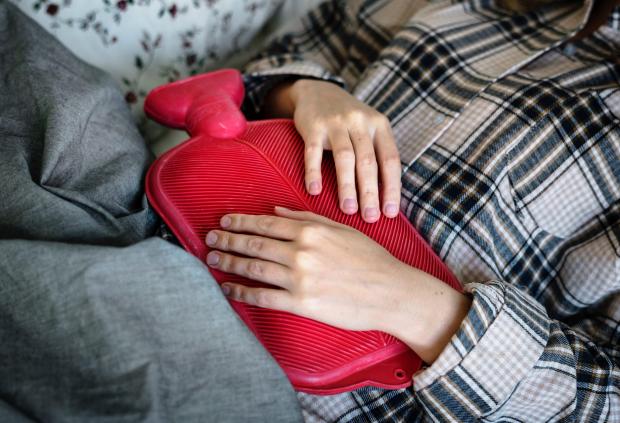
Getting anywhere near a diagnosis of endometriosis has taken about 11 years for me. I have vivid memories of being a teenager doubled over in pain, curling myself up into balls on cold floors to soothe high temperatures and excruciating cramps. I would bleed through tampons and pads and pants and trousers onto bed sheets and through to mattresses. I’d not been taught menstrual health at school or from my parents so I had no idea if what I was experiencing was normal.
Eventually, my mum took me to see my GP, who told me that my experience was normal – “It’s normal to experience menstrual cramps, everything looks fine, you’ll get used to it!” I was put on the pill to help with my periods, given some stronger painkillers and sent home. I continued to take the pill throughout my early 20s, but eventually stopped due to the detrimental impact that it had on my mental health. However, without the pill I experienced immense pelvic pain, was exhausted and in agony throughout each month. My new GP suggested that I may have endometriosis. She also told me that this meant I was likely infertile. I’ve since learnt that this was misguided information, but I went home in tears, considering my future and the children I didn’t realise I wanted but was suddenly desperate to have.
Fast forward to now and I’ve seen 4 different gynaecologists in 2 different cities, had numerous scans and tests, tried every painkiller under the sun and spent hours in waiting rooms and hospitals. Along the way, I’ve collected various different diagnoses, tried a myriad of therapies and I’m still in limbo. I’ve recently had the Mirena coil fitted to help with my symptoms, which has come with its own bunch of problems. Opting not to have keyhole surgery at this time leaves me without a firm diagnosis and I’m just taking my gynae’s word for it that it looks like endometriosis. Instead, she is putting me through a list of the least invasive treatment options. For now, codeine is my most reliable side-kick and I’m becoming slowly acquainted with a new plastic pal in my womb.
So, what’s being done?
Here at the University of Manchester, we’re lucky to have some incredible researchers investigating endometriosis from a pharmacological and a psychological perspective. Professor Kay Marshall continues to work and supervise projects on pharmacological improvements in the management of endometriosis. Trainee Clinical Psychologist Fiona Varney is working with Dr Jo Brooks to look at people’s experiences of accessing and receiving psychological and emotional support for the condition.
We chatted to Fiona about her work: Fiona’s initial scoping of previous research suggests that, while recommendations advocate for emotional and psychological support to be made available to women with endometriosis, little has been done to ask women what they would actually want from this. Her understanding is that the condition has significant psychological impact, associated with the uncertainty, unpleasant symptoms, and occasional dismissal from healthcare professionals on the road to diagnosis. As it stands, there is no endometriosis-specific psychological support available in Manchester. Fiona plans to explore whether this is something women with endometriosis would find helpful and, if so, what support they need.
Getting Support
Knowing where to get support can be tough, but it’s important to make use of our available resources. Not all period pain is normal and if something doesn’t seem right then speak to your GP. Endometriosis UK have a handy pain and symptoms diary available online for free, which can help you to describe your experience to a healthcare professional. Their website is a really useful source of clear, concise and easy-to-digest information. It can feel scary, embarrassing and intimidating to talk about your menstrual wellbeing, particularly when we are taught to hide, disguise or ignore our periods. Taking that first step is important and be reassured that there are numerous avenues for support along the way.
By Leanne and Vicky
@leannevcook @vickygrace91
If you are struggling with endometriosis, think you may have it or are struggling with menstrual wellbeing issues in general, please see these further resources:
University of Manchester Counselling Service
Endometriosis UK (there are face-to-face and online support groups available, run by women who have Endometriosis themselves. You can find the Manchester based group here).
Discover more from Research Hive
Subscribe to get the latest posts sent to your email.
 Research Hive