Originally published on DigiECR
“Someone is monitoring me through my phone”.
Is this a reasonable statement about modern life or a symptom of psychosis? Depending on the context, it could be either.
In the age of smart egg trays, wifi enabled toasters and global surveillance, it is perhaps not unreasonable to imagine that at least some of one’s online activities are being tracked.
On the other hand, psychosis is a cultural chameleon, often mirroring new developments in the surrounding culture. In the 17th century, the ‘glass delusion’, in which people became convinced that they were made out of glass, was a prevalent psychiatric phenomenon, clear glass having recently become widely available. Nowadays, delusions about phone hacking or about being an unwitting participant in a reality TV show are far more common.
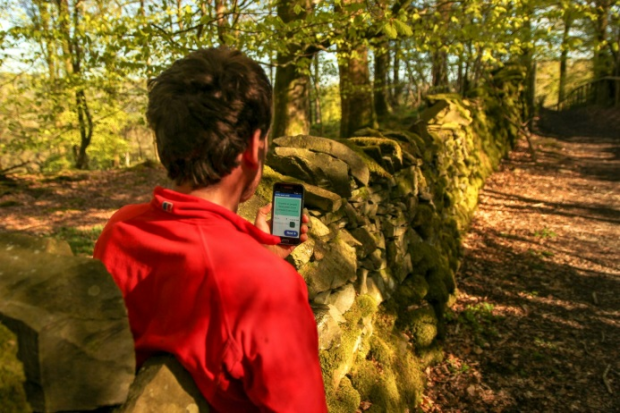
For participants in my recently published research study, the answer to the question above could plausibly have been ‘both’. Firstly, all participants had experienced an episode of psychosis within the previous year. For some, paranoia had been a central symptom. Secondly, during the research, I asked them to use a smartphone app (‘ExPRESS’) to keep track of their symptoms over time. The app uploaded their symptom reports to a server where I could see how they were getting on. I was, in essence, monitoring them through their phone. But hopefully not in a creepy way.
One of the questions that we wanted to explore in the research was whether people with psychosis are willing to use a phone app to track their symptoms. Are people who may already be paranoid likely to engage with an app like ExPRESS?
The answer: yes, mostly (but, spoiler alert, there is a plot twist).
I asked eighteen participants to use ExPRESS for six months. Each week, the app invited them to complete a short survey about their symptom levels. At the end of the study, I interviewed them about their experiences of using the app. Most participants liked using the app and thought it was useful, with almost everyone saying they would be happy to use it for more than six months. Participants commented that using the app fitted well with their routines and that the surveys only took around five minutes to complete each week.
So far, so encouraging. But was this enthusiasm reflected in how much participants actually used the app during the study? After all, they knew that my colleagues and I had spent a long time developing the app and designing the research study. Were they just telling us what we wanted to hear?
No, that is not the plot twist. Participants did actually complete the surveys really well, with an average response rate of 65% across the six months. This is similar to other studies using symptom monitoring apps in samples with psychosis, even studies with much shorter time periods (e.g. 6 days rather than 6 months). One of the reasons for our relatively high response rates may be that we only asked participants to use the app weekly (rather than daily or multiple times a day in other studies). This may be important when thinking about how to encourage more long term use of symptom monitoring apps in those with psychosis.
Now for the promised plot twist. It starts with a short fictional anecdote about broccoli.
My friend Sophie* wonders whether giraffes like broccoli. Like any good student of Broccoli Studies, she starts with a literature search. She finds a study in which 18 giraffes were asked to eat broccoli once a week for six months. End-of-study interviews** indicate that they enjoyed eating broccoli and objective measures suggest that they had eaten broccoli on 65% of occasions. Fantastic! Giraffes love broccoli!

But wait: there were another 81 giraffes*** that refused to take part in the study. What if they refused because they didn’t want to eat broccoli? Help! Do giraffes really love broccoli?
Let me explain the point behind this broccoli induced existential crisis. When I was looking for people to take part in the ExPRESS study, clinical staff identified 193 potential participants. Only 18 made it into the full study. There were several reasons for this: some of the 193 did not meet the study inclusion criteria (e.g. they had the wrong diagnosis); others were simply not given the information by staff. However, a whopping 81 people were asked to participate but said no. That’s 42% of those identified by staff and more than four times the number of people who actually took part in the study.
This is not just a feature of my research. Other studies involving smartphone apps have similarly high refusal rates. This begs the question: how clinically relevant are studies examining the acceptability of symptom monitoring apps given that they are based on highly selected samples? Can we really say that such apps are acceptable to those with psychosis if such large numbers of people decline to take part in these studies?
Perhaps the first question to ask, to try and escape this dilemma, is: why did participants refuse? It may be that their reasons for refusing were not app related: perhaps they did not want to take part in research; perhaps they were having a bad week and would have said yes on a different occasion.
Unfortunately, in the ExPRESS study, we were not able to discover why the 81 people declined to participate. Undoubtedly, though, at least some will have refused because the study involved using a smartphone app. In the next few years, I hope to do a large scale version of the ExPRESS study (funding dependant!). If I do, I will make sure that I seek ethical approval to interview people declining to participate in the app use part of the study, to investigate their reasons for this.
The second question that may rescue us from this quandary is: does it actually matter if not everyone loves apps? (Or, indeed, whether all giraffes like broccoli). People with psychosis and mental health staff have consistently emphasised in qualitative studies that, although smartphone apps and other digital health interventions may be useful, they should complement rather than replace face-to-face care with a clinician. In other words, people with psychosis should have a choice as to whether they want to use a symptom monitoring app.
From this perspective, surely it doesn’t matter too much if apps aren’t for everyone? The ExPRESS study showed that, at least for a sub-group of people with psychosis, using a symptom monitoring app over an extended period of time is perceived as acceptable and useful. We also compared participants’ symptom reports on the app with interview-based assessments. They gave similar results, but the app was quicker and easier than an interview. It therefore seems reasonable to conclude that, for those who do like the idea of using an app to track their symptoms, the option should be available. Those who prefer not to can eat other green vegetables instead.****
Disclaimers
*Any resemblance to actual persons, living or dead, is purely coincidental.
**In this fictional account, these were talking giraffes.
***No giraffes were harmed in the making of this blog.
****Do try this at home
By Emily Eisner
Discover more from Research Hive
Subscribe to get the latest posts sent to your email.
 Research Hive