You know it is bad. You have read about the record-breaking heatwaves, wildfires and typhoons. Hurricane Dorian is yet another tragic reminder of our worsening weather systems, driven by climate change. You know the ice is melting and sea levels are rising. For years, you have been aware that species are going extinct – 200 species a day, in fact. You have heard that the United Nations estimates there will be between 200 million and one billion climate refugees by 2050. You adjust your understanding. You acclimatise and then normalise.
At the moment, the planet is about 1°C warmer than it was in pre-industrial times. We are on track to be 4.5°C warmer by the end of this century – likely sooner. The last time the earth was 4°C warmer, sea levels were 260 feet higher. At this temperature, there will be global annual food crises. In certain places, six climate-driven natural disasters could strike at the same time. Globally, damages could cost more than $600 trillion – more than twice the wealth of the world today. Conflict and warfare will skyrocket, fuelled by resource scarcity.
Social collapse will occur long before then – beginning at about 2°C of warming. Already, the Syrian civil war and refugee crisis has been exacerbated by protracted drought and famine – a result of global warming. At 2°C, droughts will render countries in the equatorial band of the planet incapable of growing crops at scale reliably, meaning mass starvation. This temperature is also the tipping point for the collapse of the Antarctic and Greenland ice sheets, whose meltwater is presently raising sea levels and decelerating the Gulf Stream. As the Gulf Stream slows, it will disrupt weather patterns across the world; in the northern latitudes, this will cause recurring food and water shortages across Europe. England could run out of water within twenty five years. The United Nations’ conservative projections indicate that, on our current emissions pathway, we are due for 2°C of warming within the next ten to twenty years.
You may not have known that.
The Greenland ice sheet loses almost a billion tonnes of ice each day. Its collapse alone could raise sea levels by twenty feet, eventually drowning Miami, Manhattan, London, Shanghai, Bangkok and Mumbai. The loss of the Antarctic sheet will add another twenty feet. Today, more than 600 million people live within an altitude of thirty feet above sea level. Do the math.
By 2050, about 10% of the UK population will be affected by flooding, in Aberdeen, Belfast, Brighton, Bristol, Cardiff, Dundee, Edinburgh, Glasgow, Kingston upon Hull, London, Luton, Middlesbrough, Newcastle, Portsmouth, Plymouth, Reading, Southampton, Southend on Sea, Sunderland, Swansea, and in rural areas of Lincolnshire and Norfolk. You will almost certainly know people who live in one or more of these places. The timespan between now and the year 2050 is little more than a mortgage.
Did you know that?
Scientists have identified multiple tipping points and ‘feedback loops’ in global warming and climate change. When triggered, these will have exponential, non-linear results, and inconceivably catastrophic consequences. You only need to know a few of these to understand that we are in grave danger. Less ice means more water. More water means more flooding. Less ice means less sunlight reflected back to space and more absorbed by the planet, warming it some more – a positive feedback loop. Less ice means more exposed and thawing permafrost (frozen soil), which will release up to 1.8 trillion tonnes of carbon – more than twice as much as is currently suspended in our earth’s atmosphere. Warmer oceans absorb less carbon and heat, leaving more of it in the atmosphere, warming the planet faster. A hotter, dryer planet means more kindling for forest and wildfires and is fatal for much plant life, which together means a devastating loss of the planet’s natural ability to transform carbon into oxygen. A warmer planet means more water vapour (a greenhouse gas), meaning a warmer planet. And so on.
Overwhelming, isn’t it?
What are we doing about it?
In 2016, 195 countries signed the Paris agreement, which mapped out a global goal to limit warming to “well below 2°C”, ideally in the region of 1.5°C. Three years later, no industrial nation is on course to meet its commitments and most have targets that are woefully inadequate. The reality is that 2°C and above is already ‘locked in’ and soon to be at our doorstep, due to the delayed effect of greenhouse gases already in the atmosphere. We are only seeing the effects now of warming from previous decades.
Even if countries collectively initiated, with immediate effect, all of the Paris accord commitments, the Climate Action Tracker predicts we will reach about 3.2°C of warming by the end of this century – likely sooner, due to the aforementioned feedback loops and tipping points of climate change. Plus, countries’ climate targets have been fixed and agreed, and legislation signed, based on the idea that we will develop and implement carbon-capture technology to suck carbon out of the air – technology which currently does not exist as we need it to. Theresa May’s promise of ‘net zero carbon emissions by 2050’ is based in part on the same unfit-for-purpose technology. This ‘unfinished puzzle’ is a hand-me-down for our generation and our children to solve – if we are still alive.
Professor Kevin Anderson is an expert on sustainable energy and climate change at the University of Manchester. In his view, arbitrary targets (e.g. by 2050, by 2100) are unhelpful because global warming is predominantly an issue of cumulative emissions. Climate change will not stop at 2050 just because the models do. He believes we cannot fool nature with technology and governments must try much harder at mitigating emissions.
What can you do about it?
We have been sleepwalking and it is time to wake up. Greenhouse gas emissions are still increasing – hitting an all-time high last year. Radical, bold, and immediate changes are needed to ween ourselves off of fossil fuels. We know this, yet we have a tendency to be bizarrely complacent about climate change. The scale of the crisis makes us feel helpless, particularly when many essential changes are systemic economic, infrastructural and policy changes that currently only governments have the power to enact. Our government and those of other countries are simply not doing enough, fast enough.
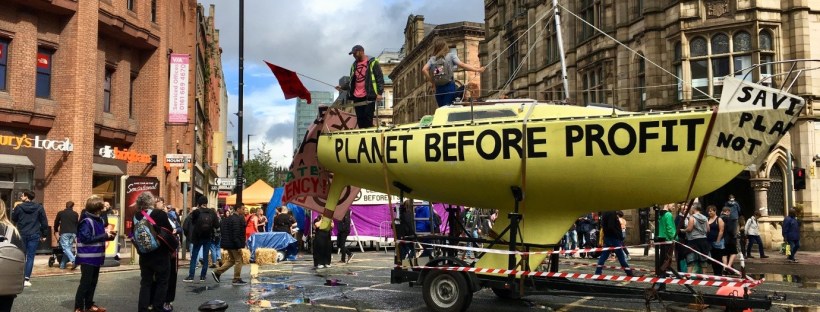
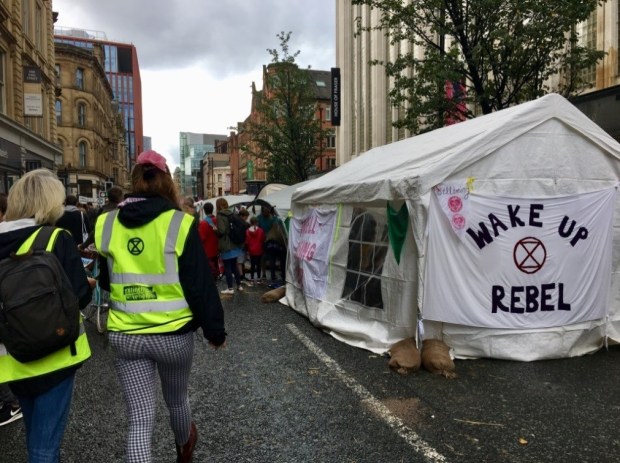
We need to come together to shock the systems into action. Extinction Rebellion (XR) is a climate and environmental movement, engaging in peaceful and nonviolent protest against the climate crisis. Their methods are evidence-based, informed by the science of social change, including the nonviolent civil disobedience movements of some of the best: Ghandi, Rosa Parks, and the suffragettes. XR’s protests impelled the UK government to be the first to declare a climate emergency. In its first year, XR amassed over 100,000 members in the UK. Local groups are springing up all over the nation, including Manchester, and also internationally. The next XR protest starts on October 7th and everyone is welcome.
Some changes can be made closer to home. Greenpeace has estimated that the world needs to cut its meat and dairy consumption in half by 2050 – that means you. The consumption of fast fashion has got to plummet – that means you. Without a viable, decarbonised mode of flying, the world must drastically reduce or stop flying – that means you. These changes may require some creativity. For example, international conferences are commonplace in academia, but there is an emerging trend to attend ‘virtually’, thus reducing the carbon footprint and financial burden (particularly helpful for postgraduate students).
A state of half-indifference and half-ignorance will not float when the ice sheets collapse and our world floods. Now that you know, what are you going to do about it?
By Hannah Long
PhD student at the Manchester Centre for Health Psychology
Further reading
There is a small but important difference between knowing something and believing something. It is natural to be sceptical and I would not blame you for thinking I am erring too far on the side of caution or being alarmist. You may want to learn more and to make your own conclusions. If that is true for you, there is some reading and listening you can do:
- In his 2018 book, David Wallace-Wells (to whom I owe thanks for many of my sources) syntheses the latest research on climate change. ‘The Uninhabitable Earth’ can be found here. The book was based upon an article (2017) by Wallace-Wells, which can be found here.
- The latest report from the Global Commission on Adaptation can be found here.
- Professor Kevin Anderson has videos of his lectures on YouTube. Here is one given at the University of Manchester (begins at about 11 minutes).
- Extinction Rebellion have posted various talks online, for examples see here and here.
- Find your local Extinction Rebellion group here.
- Feeling overwhelmed, despair and even grief is common and people are writing about it.
Discover more from Research Hive
Subscribe to get the latest posts sent to your email.
 Research Hive