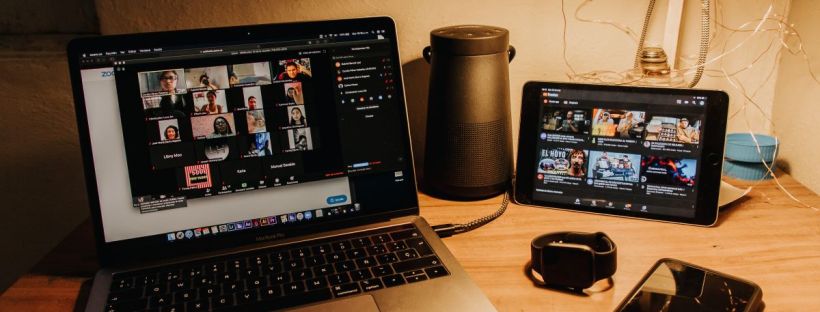
A viva can feel a very daunting experience. Aside from the first year continuation viva, most of us have never undertaken an oral academic examination. So there is an element of the ‘unknown’. It may be the first time you have met your examiner, an eminent person in your field. It is the culmination of several years’ work – the judgement of whether or not this creation that has taken so much effort, thought and emotion is worthy of the title PhD. Like any unknown, it feeds on imposter syndromes and related anxieties, and breeds horror stories. So the context of a global pandemic and university shutdown may not feel the ideal context in which to be doing your PhD viva. But each month between 30-40 students from FBMH undertake a viva and they have continued to do so despite the campus closure. So what happens when the viva has to go online?
I had the fortune of examining a PhD thesis a couple of weeks into Lockdown and thought I’d share my experiences, along with those of Nia Coupe, whose Viva was scheduled the week following University closure.
The student’s experience
About four week before my viva, I was already aware of the possibility that my viva wouldn’t be as I had imagined it over the weeks and months leading up. My external examiner was supposed to be flying in from Ireland, and with some flights already being cancelled across Europe, I knew it was possible she would only be joining us virtually. Fast forward a couple of weeks and the whole thing was now planned via Zoom, with all of us joining from our homes. I didn’t feel too concerned about this at first, although I’d never used Zoom, I would be at home – somewhere familiar- and there were no concerns about being late! However, another week passed by in a rapidly changing world and all schools were now closed, meaning we somehow had to keep a 2 and 6 year old entertained and away from me for an unspecified amount of time. Luckily, my husband and I are both working from home at the moment, so we planned activities, and had in-case-of-emergency sweets and a film at the ready. I had set up my viva corner in our bedroom, where I could shut myself away. I had my laptop on my vanity desk, and had placed another small table to my right where I could place my thesis, a pen, and a large glass of water.
On the day, we were very lucky to have absolutely gorgeous weather, meaning the kids were outside playing in the garden for the majority of the time. Most surprisingly, they didn’t come in once throughout (I suspect the sweets were deployed at some point). The examiners both introduced themselves, and instantly put me at ease, telling me how the viva would run, and importantly, that they had enjoyed reading my thesis. I told them that I was concerned about the kids popping in and we laughed about the strangeness of the situation. The viva lasted approximately 1 ½ hours, with each examiner asking one or two questions per chapter (after an initial ice breaker). We worked through the thesis chapter by chapter (having markers at the beginning of each chapter really helped me find the relevant sections). As we arrived at the discussion, I felt my shoulders drop as I realised that the end was in sight. Not that it wasn’t enjoyable – I enjoyed this opportunity to discuss 5 years of hard work.
After the final question, I felt pretty positive – I had been asked no questions I wasn’t prepared for, and apart from one that I’d struggled a little with, I felt I had been able to answer the questions adequately. The examiners reiterated what they had said at the beginning, which was that I would be asked to leave at this point for them to discuss their recommendations. We checked they had my mobile number so they could message me to re-join the meeting, and I was told to make myself a cup of tea in the meantime. I had barely reached the kitchen to put the kettle on before my phone began to ring, asking me to return. I had hoped the fast turnaround was a good sign, rather than a sign of a big issue! Luckily, the outcome was good (no corrections!) and I was elated. I let my family and supervisors know ASAP, and arranged a zoom with my supervisors for later that day so we could debrief, and have a mini virtual celebration. I definitely fall in the camp of those ‘viva survivors’ who had a good experience, despite the uncertainties around the virtual nature of the viva.

The examiner’s experience
For many of us Zoom has become the new mode of work, virtual pub quizzes, book clubs and family gatherings. I admit that, as a bit of a technophobe, having to move the Viva online, without backup IT support (with an already shaky internet connection) was a little worrying. Myself and the external had our pre-viva meeting that morning, where we exchanged reports and discussed the areas we wanted to explore during the Viva, in the way we would normally. The only difference being was that we both could have a cup of tea in our favourite mugs – her from a kitchen table, me from my attic study. I had contacted the student the previous week with the details of the Zoom call, assuring them we knew it was an unusual situation and would do what we could to put her at ease. We swapped phone numbers and skype details as a backup in case of internet difficulties (which there weren’t). I made sure I was logged on in advance of the start time. She was very prompt but we had a couple of minutes to wait before the external joined us. Seconds seem like hours in such situations, but it gave the opportunity to check the connections and help settle initial nerves. The viva then progressed as it would have under normal face to face circumstances. It afforded the same opportunity to check understanding, clarify areas, hear about the decisions and findings (and challenges), consider how the new research fit into (and extended) the wider research landscape.
We had agreed during our pre-viva examiner meeting the order of questions and who would ask which, which was important as it can be harder to interrupt seamlessly on Zoom. But there was still scope for discussion between the three of us. We started with some opening questions about the key findings, then worked our way through the thesis, chapter by chapter and study by study, finishing up with considering the general strengths/limits, and implications and future directions. The student left the meeting so we could discuss the outcome. In this case some minor corrections, some extra text/discussion to add, amendments to a couple of figures, a short list of typos. A good outcome and I texted her to say we were ready for her to return. She had asked if her supervisor could join the call to hear the outcome, which we were happy to agree to (it’s not that unusual for students to wait with their supervisors during the post-viva deliberation). Giving the outcome of a successful viva is one of life’s great pleasures. Of course she wasn’t going to process or remember the summary of the corrections (no matter, they will all be sent in a report later in the week). More important was the ear-splitting grin and to hear the shouts of congratulations from the family huddled in the hallway.

Some tips
- Check your technology. It may sound obvious, and most of you will have had ample practice by now, but if not, make sure you’ve had a practice run on Zoom or whichever platform you’ll be using so it’s familiar. Make sure your camera picture is good and lighting adequate, and that you are set up in a place in the house with good Wi-Fi signal, or better yet, connect your computer directly to the internet (e.g. Ethernet power line or router if possible). If others are in the house, make sure they won’t be taking up the bandwidth (no Netflix!). These are the things you can control and is one less thing to worry about on the day.
- Build in plenty of time. For examiners this might mean having the pre-viva meeting on a different day, or ensuring a break before the Viva. A fresh cup of tea, and no risk of overrunning and plenty of time to ensure connections are working before the student joins in. For students this will mean ensuring you are logged on and ready to connect.
- Be organised. The internal examiner should send the student an email in plenty of time, with all the information about the meeting details, and swap contact information in case internet connections struggle. Consider where you will have the viva. Where is the most appropriate space? Ideally somewhere quiet, comfortable and away from distractions. Minimise likelihood of distractions (phone and email turned off? someone looking after the kids? is that cat out?). Have a cup of tea/glass of water to hand. You might want to ask your supervisors if they want to be invited to join in to hear the outcome, or arrange a time to call them afterwards.
- Settling in. People perform at their best when they are at ease so as an examiner putting a bit more effort into making students at ease is really valuable. Acknowledge this is an unusual situation. If you enjoyed reading the thesis/topic, tell them. It is strongly recommended that an independent Chair is present for online vivas. This person won’t have read the thesis or ask questions, but is there to ensure everything goes smoothly. Explaining each person’s role at the outset and the structure for the Viva helps settle nerves. At the outset, reiterate what needs to happen if internet connection is lost.
- To share or not to share? It is likely none/most present won’t have a hard copy of the thesis in front of them. A second screen/tablet can help compensate for this so you can keep the video link in front of you whilst moving around the thesis document. Many video-link facilities allow you to share documents on screen. This is one way of referring to a figure or table. For security reasons the default for Zoom is that only the host (ie the internal examiner) can do this, so they will need to make the student a co-host if you want to share your screen. It might be an unnecessary complication, neither of us needed this facility in our viva experiences. But if you think you might you should discuss this with your internal in advance. Regardless, it’s important to be really clear what page you are discussing, and give time for everyone to find the relevant place before launching into questions and answers.
- Finding out the outcome. At the end of the viva the examiners will want to meet separately to discuss the recommendation and any corrections before inviting the student back for the outcome. They should be explicit about how long that gap will be and if you should re-join or if you will be contacted (and how) when it is time to log back onto the call. They should be clear about the next steps. If it’s a positive outcome – no or minor correction – then a big congratulations is in order. Students should expect to hear formally the outcome of the viva as usual from the Doctoral Academy in a few days (but remember the DA staff are all working from home, around other caring commitments too, so there may be a delay). If there are corrections these will be sent to you with information about the timing and process for revisions or resubmission. Let your supervisor and friends know – they will probably have been as nervous as you have been.
- Celebrate! People often warn of the anti-climax of a viva, and this may be heightened by the virtual format, particularly if you are living alone. It’s easy to let these momentous occasions pass without a celebration, but make sure you do something special – have a glass of bubbly, buy yourself a viva gift, arrange a zoom party. Whatever makes you stop and mark the occasion.
CARD provide support for students in preparing for a successful thesis and viva. This training is currently being moved into online form, further information can be found here.
Written by Sarah Peters (@sjkp121) and Nia Coupe (@NWCoupe)
Photo credits
Photo by Gabriel Benois on Unsplash
Photo by Chris Barbalis on Unsplash
Photo by Adi Goldstein on Unsplash
Photo by bruce mars on Unsplash
Discover more from Research Hive
Subscribe to get the latest posts sent to your email.
 Research Hive