(Photography competition at the end!)
By Nadine Mirza with Dr. Dalia Tsimpida
Be it air, land, or sea, the military has the highest noise levels of any career out there. Between your rifles, grenades and various other weapons found on a military base, exposure to sound pressure levels of between 103-156 decibels is not unfound. Comparatively, the human ear begins to sustain long term damage at 75-85 decibels. It’s not uncommon to find hearing loss being toted as a medal of honor, synonymous of years in service. For Dr. Dalia Tsimpida, former aircraft weapon technician with the Hellenic Air Force, it was time to rip that medal off.

Hearing loss is currently the world’s most prevalent sensory disorder, and the 4th global cause of years lived with disability- rising monumentally from its spot as 13th less than six years ago. It’s estimated that 15% of the world’s adult population has some form of hearing loss, with half qualifying as disabled. The general consensus around hearing attributes it to a matter of ageing and genetics, written off as an inevitability.
But as a member of an elite group of explosive ordinance disposal specialists, Dalia questioned this. “I was able to look into this matter through different lenses, as I was studying for a bachelor’s in psychology in parallel to my full-time job. I started thinking that hearing loss does not come necessarily with ageing; there are many things we can do to protect our hearing when we are young”.
This was a catalyst that led her from the grit of the air force to a near decade in groundbreaking hearing health research.
“I saw firsthand the barriers that the population with hearing loss faces in the use of access to health services. I decided I wanted to identify these barriers and find solutions”
“After my bachelor’s I studied for five years and was awarded a national certification in Greek Sign Language. I became a hearing member of the Deaf Community. I saw firsthand the barriers that the population with hearing loss faces in the use of access to health services. I decided I wanted to identify these barriers and find solutions”
What followed was a Masters in Health Policy and Planning for Health Services that began to explore this in the Greek population. Then in January 2018, Dalia was awarded the NIHR Biomedical Research Centre Doctoral Research Fellowship. She came to the UK and began pursuing a PhD on “socioeconomic and health inequalities experienced by people with hearing loss” at the University of Manchester.
What she found was that hearing loss, a characteristically physical chronic health condition, was also something of a lifestyle disease- it was influenced by modifiable circumstances and causes. She presented this through the first study ever conducted in hearing loss research that examined the association between hearing loss and indicators of socioeconomic status; education, occupation, income, and wealth. She also explored the association between hearing loss and lifestyle factors such as tobacco consumption, BMI, physical inactivity, and alcohol consumption above low risk levels.
A significant proportion of hearing loss burden is preventable.
For the first time concrete results showed that hearing loss can be as strongly attributed to these socioeconomic and lifestyle factors as it is to demographic risk factors like age and gender. Not an inevitability. In fact, it highlights that a significant proportion of hearing loss burden is preventable. And Dalia ensured she had a say in this prevention.
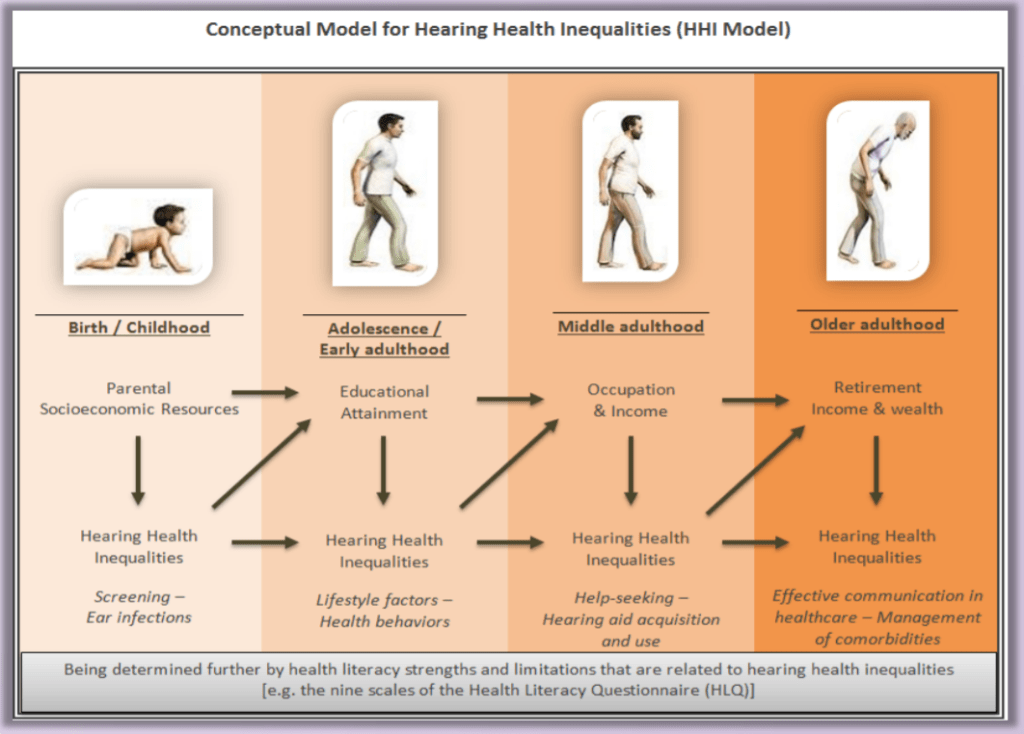
In 2018 she published the Hearing Health Inequalities Model (HHI Model), a framework that explains the relationship between complex inequalities and hearing health while also detailing recommendations on prevention, identification and management- another first of it’s kind that covers the entire life span. The HHI Model is a call to government officials and policymakers alike to address the socioeconomic disparities costing people their hearing while letting them believe it is a loss they were always going to encumber.
Moreover, with this loss of hearing also comes the potential for decline in mental health. Dalia assessed the relationship between hearing loss and depressive symptoms in later life between different socioeconomic groups and across her sample found that hearing impairment doubled the risk for depression overall. Crucially, it tripled it in lower wealth groups. “This study’s novelty is that it offered psychosocial mechanisms that can help explain the relationship between hearing loss and depression in older adults”.
This research, which explained dynamics unknown till now despite 40 years of research in the field, was not born in vacuum.
“My dad was losing his hearing gradually from the age of 30, which made me consider that there might be other detriments of hearing loss than solely the age. His lived experience has enlightened my understanding of all these complex issues”
“Coming from a family of low socioeconomic position allowed me to deeply understand relationships in the causes and consequences of hearing loss. My dad was losing his hearing gradually from the age of 30, which made me consider that there might be other detriments of hearing loss than solely the age. Without my dad’s impact on my life, I could not have developed this model. His lived experience has enlightened my understanding of all these complex issues”
Unfortunately, Dalia’s father passed away a few months ago, but her work in hearing health continues to act as a fitting tribute. In 2018 she received the National Award from the British Audiology Association and in 2020 she was awarded the International Society of Audiology Scholarship, allowing her to present this research at the 2021 World Congress of Audiology. She has also been nominated for PGR Student of the Year. Perhaps most celebratory, she has also received her doctorate with no corrections.
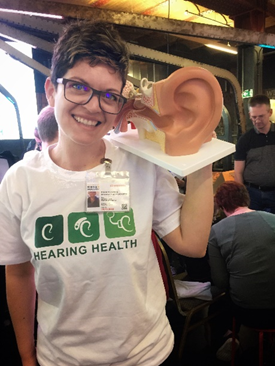
In the past Dalia has devoted her expertise to public engagement and outreach activities on good hearing hygiene. She has campaigned for reduced hearing health inequalities such as through initiatives promoting community hearing screening tests. She also organized a half day symposium at Manchester on World Hearing Day 2020 – ‘Hear for You: A Primary Health Care Approach for Hearing Health’ – with herself and invited experts speaking on preventing and addressing hearing loss, effective communication as an aspect of active ageing and wellbeing, and research priorities for mild-to-moderate hearing loss.
For this year’s World Hearing Day, funded by the Institute for Health Policy and Organization, Dalia has organized the first Virtual Gallery Project “Hearing Care for ALL”. Targeted towards the general population and policymakers to raise awareness about the importance of early detection in decreased hearing, this online art exhibition is displaying photos, visual art and poems. Registered with the World Health Organisation, these features will emote the WHOs message “Hearing care for ALL: Screen. Rehabilitate. Communicate”
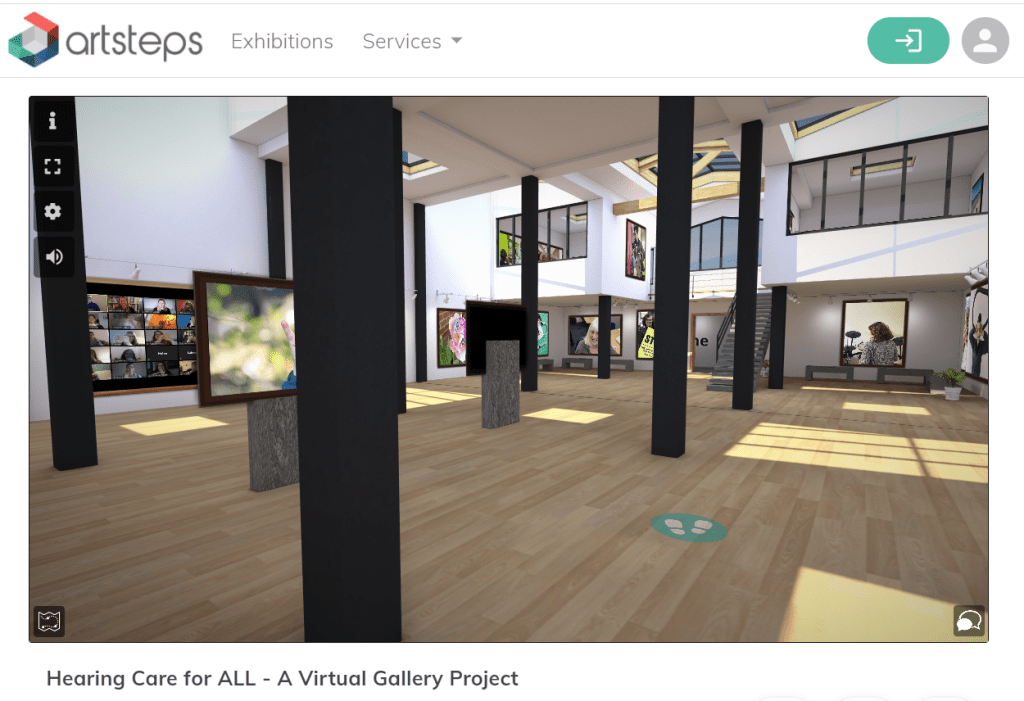
The Virtual Gallery Project is currently viewable to all and is taking submissions for its photography competition: choose a topic around hearing health or hearing care, take a photograph, give it a title and short description, and upload. All entries will be featured on the virtual gallery and the top three will be awarded gift cards. Dalia will also be showcasing a special lecture on her research for the Institute for Health Policy and Organization on influencing hearing health policy in England on the 3rd of March (World Hearing Day!)- tickets available on Eventbrite!
Dr Dalia Tsimpida is a postdoctoral researcher at the Institute for Health Policy and Organisation (IHPO) and has recently successfully defended her thesis for a PhD in Audiology.
HHI Model Reference: Tsimpida, D. (2018). Tackling Hearing Health Inequalities: The Improtance of a Life-Course Approach and the Vicious Cycle among Socioeconomic Position and Hearing Loss. Poster session presented at Health Inequalities Research Network Conference 2018, London, United Kingdom.
Discover more from Research Hive
Subscribe to get the latest posts sent to your email.
 Research Hive
Ground-breaking & truly inspirational work that highlights hidden health inequalities
LikeLike