By Jack Sharpen
Currently whelmed
Overwhelmed is a weird word.
Etymologically, its derivative whelmen is the Middle English for capsizing/overturning, so prefixing with “over-” is reinforcing one point: you’re kind of doomed.
Being overwhelmed isn’t a rare occurrence for us Hive readers: postgraduates, staff and all in-between academics have a higher proportion of teetering on the brink.
My personal struggles with this chronic feeling is consistently exacerbated by the congenital “Yes Man!” mentality. Just tabling the current commitments below is a kind kick to blood pressure levels, along with that dizzy feeling before pitchpoling. Writing this article alone has (as any Hive followers know) is itself a little overdue.

With this in mind and whelmed defined, how do experts, psychologists and (a) barely functional sub-editor cope with this all-encompassing problem?
Danger Danger, High Whelm-age!
The first signal is knowing you’re overwhelmed. For me, having a self-reflection to see iif these are a daily recurrence is the biggest indicator:
- You’re multitasking multiple projects/commitments without making progress.
- When doing tasks, it’s becoming more frantic but less focused.
- You start being a serial procrastinator with deadlines by sidelining for non-work.
- You begin often paralyse during the day as there are too many deadlines/commitments to complete
Overwhelmed takes its toll on emotional stress too, usually by developing anxiety-based symptoms. If all the above are combined with troubled sleep patterns, feeling ill/fatigued for no reason, isolating from friends and family and stronger mood swings over smaller issues, it’s time to stare in the mirror and say
“I’m overwhelmed, it’s okay”.
Prioritise. Engage.
Becoming overwhelmed starts when this overflow of tasks, projects and commitments start slipping away. The first step is to take back control and put a plug in this leak.
Water metaphors aside, having a look at all the hefty things to do is scary, but forget about everything that doesn’t NEED to be done right now. There are many that should be done (cleaning the bathroom, anyone?), but exclude those for the close deadlines or must-do’s. Place these immediate or essential tasks (including breathing) on top of the list and to start or continue, as they are often ones that are the root cause.
After getting your highest priority for the week, day, hour or even minute set straight, starting in any small way will begin to allay any fears. Be it reading one article, doing a small plan or preparing for the next experiment is progress; Make it so number one!
Focus → Break → Medi-YEET → Repeat
If even this thought freezes your body, it’s time to break it all down. Delving into this 4-way cycle at any point works wonders in deceiving that overwhelming feeling, and kickstarts some productive panache. Grabbing that priority and focus on the now, not the later, will bring sharpen your intent and start to reap rewards.
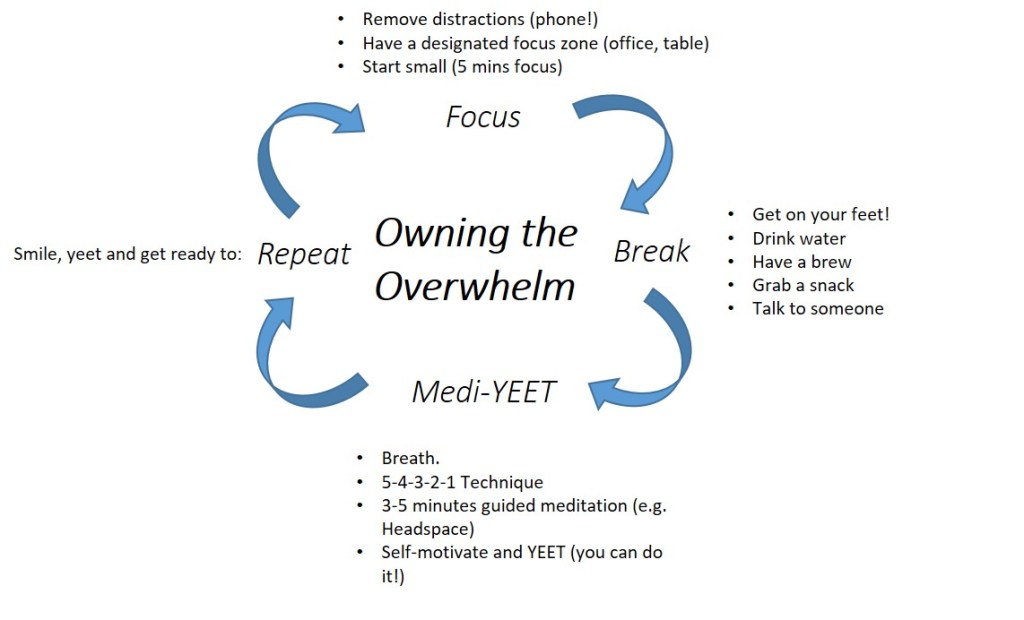
For focus, I am dreadful at sitting still and working. Some readers might be able to get into the swing at the lab or at home and maintain a certain seated level. Even during important experiments, meetings, talks and deadlines, moving around every 30-60 minutes for this Jackrabbit is a given.
After doing some digging, it turns out this kind of break and shaking off is a common theme with many mindfulness strategies. Getting up for a quick cuppa or simply walking away from the focus zone for 5 or 10 mins is a sound strategy in resetting the senses. Even stopping just for more water is important, as increased tiredness and stress can come from being too dehydrated.
If the focused feeling starts to slide and the overwhelm freeze is chilling the bones, practising some mindfulness with Medi-YEET will help to stay grounded. One of the best skills to use is the 5-4-3-2-1 technique, whilst our very wellbeing sub-ed Oliva has reviewed some excellent apps. Adding this extra YEET to the meditative practise is an easy way to get in a positive mindset; beginning each task with a YEET is a real motivator, because YEET you can!
Planning is Everything…
But plans are useless. This repeated quote (points for working out which President) epitomises the right mode for overcoming an overwhelming. Prepping ahead for what needs to be done and roughly when by will provide both the priorities and focus from above on a weekly basis.
Continuing with the military paraphrases, even a plan will always fall apart at contact with the enemy. This is completely fine. Not finishing all of the weekly ticklists is a given for us PGRs, as long as the ticklist exists. With this chaotic brain, I have both a weekly excel calendar for general day-to-day guidance, as well a filofax for important notes and events.
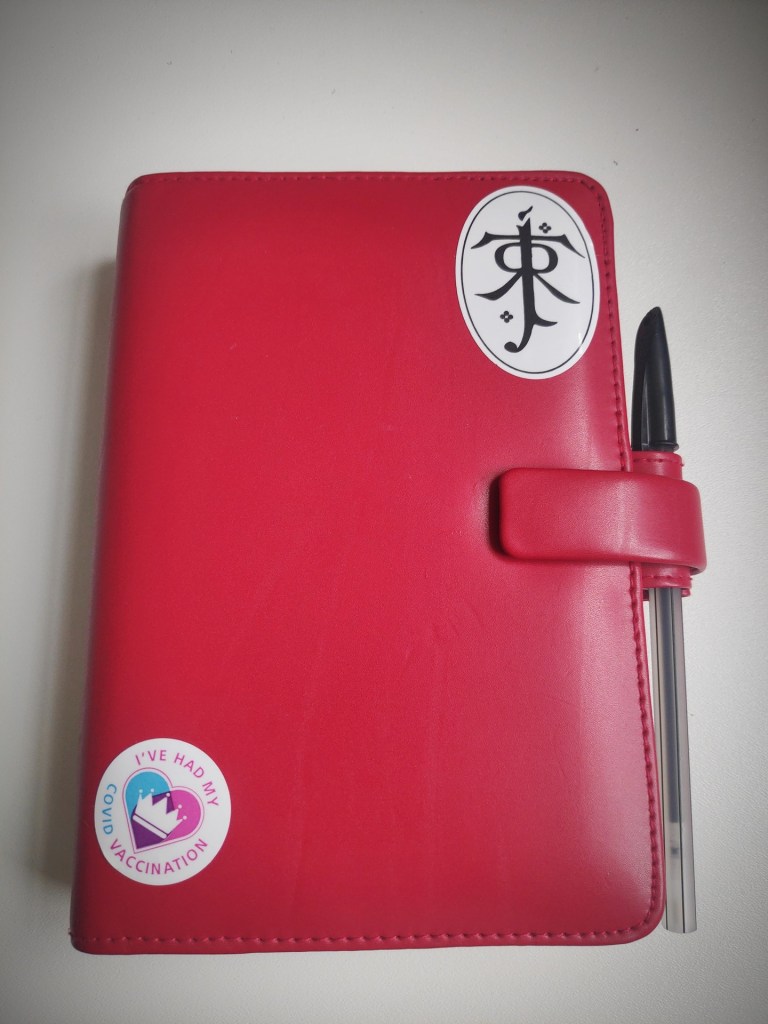
Buying this little red book was perhaps the single greatest change when levelling up to a postgraduate, as the disorganised squiggles are now united instead of scattered across napkins, scrap paper and opisthenars (mine or others). If you’re living in the 21st century, google and outlook calendar along with a well-drilled phone notes are excellent options, though not quite as pretty.
Saying No, Right.
Perhaps the hardest part with all of this is knowing when to stop.
Being a Yes-man/woman/nonbinary will open up opportunities like never before with amazing life experiences. As with priorities, some things have to be pushed down or curtailed for your own whelmed-being.
Your supervisor dumps you with another student’s experiment on the same day as a long-time planned one that’s really important to your project? Politely say that you can’t do it for x reason.
Having multiple plans that collide in the same week, leading to 10 hour days? Choose the most important and don’t feel guilty for not doing the other.
Writing a Hive article about being Overwhelmed for April but catching up on lab, tutoring and charity work? Delay it for 2 months to focus on more pressing priorities.
The old adage on maintaining a work-life balance is a crucial cog in keeping you going. One thing overwhelming is great at is making you feel guilty for not finishing it all at once. Learning to know your limit for what you can and can’t do goes a long way towards defeating this. Simply accepting “this is not going to happen” can boost your workload and relief all at once.
Explaining to jefes that you’re close to being overwhelmed takes nerve that is needed. Combining this with the right support group that understands the pressures without getting miffed are fruitful factors for just sayin “No!” when it really matters.
Whelm, Whelm, Whelm
From all this information for your gratification, I hope this article has only overwhelmed you with a sigh of relief and cheer. It’s best to realise that don’t worry, we all experience that whelmen feeling, and these few tricks, tips and self-loving kicks can be used
If it seems too overwhelming, just remember: starting small is still an achievement, and a little goes a long way.
Discover more from Research Hive
Subscribe to get the latest posts sent to your email.
 Research Hive
One thought on “PhD-Overwhelmed? How to say Yes and No”