
Author: Erin Pallott
You know the feeling. That scratch starts in the back of your throat, your whole head hurts, and only one nostril is working. Great, you’ve got a common cold. A first-class ticket to snot city. When you hear the word ‘mucus’, this is probably the first image that comes into your head. Allow me to try and convince you that it’s so much more than that, and explain why we’re investigating it here at The University of Manchester.
The What, Where and Why of Mucus
Mucus is a hydrogel made of mostly water and a network of proteins. The major macromolecular components are enormous and highly variable glycoproteins called gel-forming mucins. The mucins are synthesised by specialised epithelial cells, particularly goblet cells, and tightly packed into intracellular granules until signalling cues trigger their release to the surface. After secretion, the proteins are polymerised via the ends into net-like sheets and they interact with water to expand 1000 times in volume compared to when they were stored in the cells. The addition of hundreds of sugar groups (glycans) to each mucin protein backbone requires coordinated activity by many enzymes. That, along with the sheer quantity of mucus produced by goblet cells, requires a massive energy expenditure from the host.
However, mucus has been around for hundreds of millions of years, suggesting it is worth the energy cost. Mucin genes have been present since early metazoan life, such as in the simplistic comb jellyfish1. Since then, it has served as an invaluable part of host defence by segregating microorganisms in the environment away from multicellular organisms. A fascinating example is the hagfish, a 300-million-year-old living mucus factory. When threatened, it secretes vast amounts of slime made of mucins and other thread-like proteins. That would probably be gross enough to put you off grabbing them, but if you’re a fish trying to filter oxygen from the water, the seawater turning into a strong, stretchy goo around you is life-threatening. If you want to see the graphic details for yourself, this video is great.
In humans, mucus lines all our mucosal sites, including the eyes, oral-nasal cavities, the respiratory system, the gastrointestinal tract, and the reproductive tracts. The external-facing surfaces are all securely blanketed in a layer of mucus which serves numerous purposes. For example, in the intestine, the mucus layer must allow selective absorption of nutrients, exclude pathogens and provide a habitable environment for our commensal bacteria. The production and secretion of intestinal mucus proteins is a constant process, under regulatory control by the immune system (among other factors). Under homeostasis, mucus is constantly replenished by the goblet cells in the epithelium.

Too Much, Too Little
We have known that mucus quality is an important factor in health for a long time, though maybe not always with the correct reasoning. Mucus fits into 1 of the 4 humours, an ancient system of medicine usually accredited to Hippocrates. It states that the body’s health is controlled by 4 bodily fluids; blood, black bile, yellow bile and phlegm, and the cause of disease is an imbalance of any of these. This system gets a lot less scientific, with these fluids representing natural elements, seasons, stages of life and even personalities. If you fancy a 2-minute procrastination session, you can take a personality quiz here to find out if you’re a “phlegmatic” personality type like me.
This system persisted until around 1850, when germ theory finally started becoming more accepted. While we have no evidence that the amount of mucus you have in your body controls your temperament, there is plenty of evidence that a change in the quantity and quality of your mucus can be a cause or symptom of disease. If the mucus in your intestine is dysregulated, your microbiota will reach your tissues and cause inflammatory bowel disease. In cystic fibrosis, the mucus is dehydrated and secreted excessively, making it difficult to clear from the lungs. Mucus can also be a feature of cancer; mucinous carcinomas occur when tumours incorporate surrounding mucins. Pseudomyxoma peritonei (PMP) is a rarer example, causing intestinal goblet cells to secrete massive amounts of the main intestinal mucin, MUC2, which gets deposited into the abdominal cavity. In some case studies, over 10 litres of mucus have been extracted from patients2,3. These mentioned diseases are complex and multifactorial, making them important topics of research to develop earlier diagnostics and more effective treatments.
Mucus research at UoM
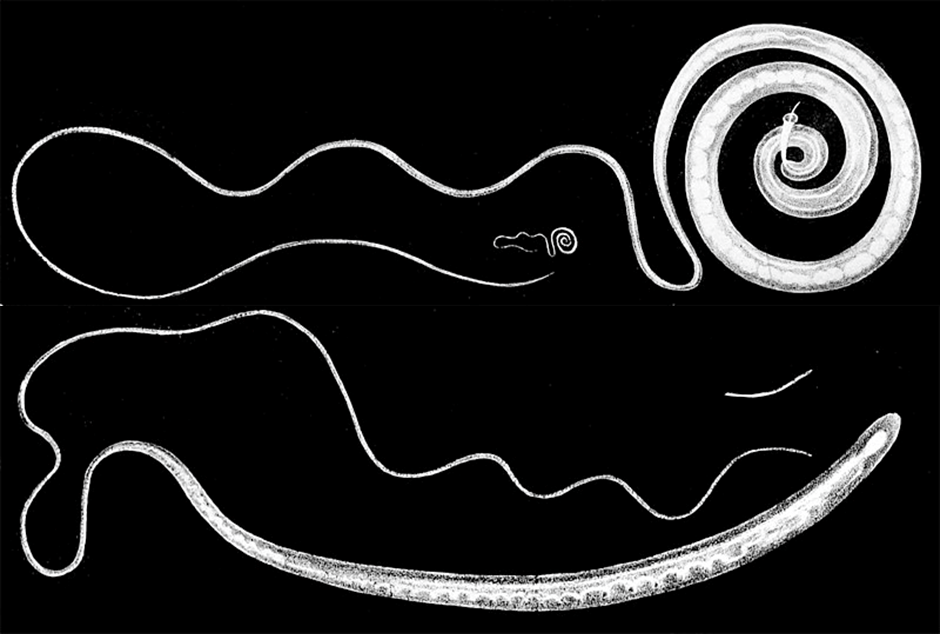
Recent evidence has shown that the complex mucins have more active roles in host health, challenging the traditional notion that mucus is just a passive glue trap for pathogens. During infection, certain inflammatory responses can upregulate the quantity and alter the quality of the mucus produced. Here at UoM, a collaboration between the Thornton and Grencis labs for over 10 years has examined the role of mucus in gastrointestinal helminth (parasitic worm) infections, joining expertise in mucin biology, biochemistry, infection biology, and immunology.
Across several publications, they have shown that in response to infection with Trichuris muris, a helminth similar to human whipworm, mice switch up intestinal mucus production due to immune signals. The intestinal goblet cells begin secreting a different gel-forming mucin called Muc5ac, which is usually found in the lungs and stomach, not the intestine4. Production of this mucin is a key determinant as to whether mice will spontaneously expel the worms, and the mucin itself may actively cause damage to the parasite5. They also showed that the pattern of glycan groups on mucins determines the outcome of infection6. Responses to intestinal worms in the intestine also caused immune-mediated changes to mucus at other sites, shown to protect the lung against infection by another worm species. Even the eye showed changes in mucus quality during infection7.
More research at UoM and other institutions has continued to suggest new roles for mucus proteins, including controlling the microbiota, interacting with the immune system, and controlling infection. For anyone interested in learning more about this field, there are several fantastic open-access reviews8, 9, 10.
How the immune system regulates the production and properties of mucus during infection is also the main research question of my PhD, mixing immunology and matrix biology, which is a major research theme here at UoM. This is just a whistle-stop tour about some interesting – I’m sure you’re agreeing by now – things about mucus and how it’s studied here, and I’ll be keen to share more specific and in-depth updates on UoM’s mucus research in the near future.
Discover more from Research Hive
Subscribe to get the latest posts sent to your email.
 Research Hive
2 thoughts on “MUCUS! (Finish your lunch first)”