
Author – Phoebe Harding-Walker // Editor – Erin Pallott
Language is a central component of the human experience. We utter thousands of words every single day to share our thoughts and feelings, express our interests, communicate our amazing ideas with others and much, much, more. But how do children master language? How do they learn all the words that end up forming their vocabulary? And, importantly, in what educational context do we best learn these words?
Well, I’m glad you asked. A recent study at the University of Manchester’s own Child Study Centre sought to answer this very question. The authors worked closely with the Manchester Museum and an inner-city primary school to investigate which educational context better supported word learning in children – the museum or the classroom.

How did they address this question?
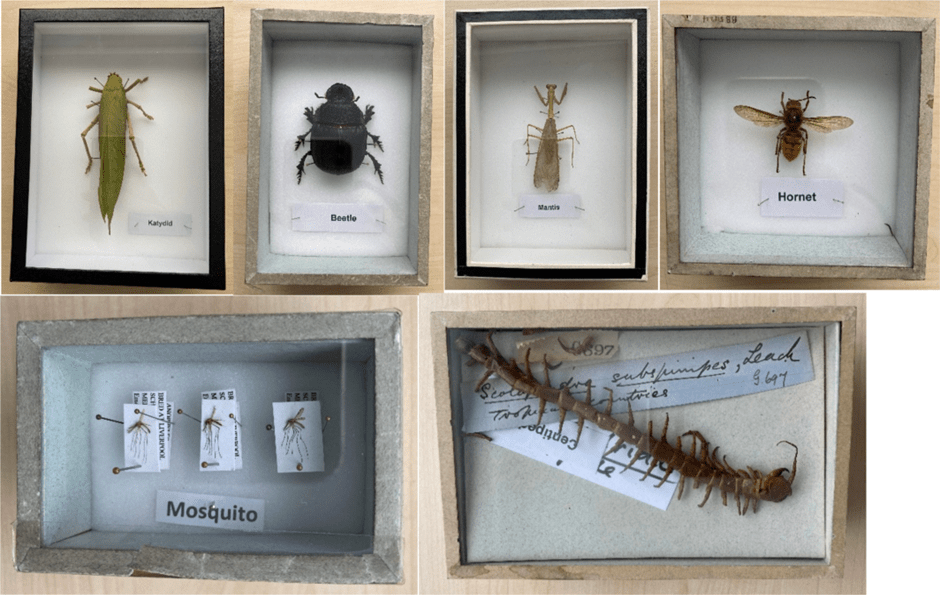
The study included 152 child participants between the ages of 4 years 4 months and 5 years and 8 months – all children spoke English as an Additional Language. The children were split into three groups and were all taught by their regular class teacher; one group were taught words in the museum (using the museum displays and boxed specimens), one group were taught words in the classroom using museum resources (boxed specimens) and the final group were taught words in the classroom with classroom resources (2D pictures and a non-fiction book).
Children were taught six words using the materials listed above; these were: beetle, mantis, hornet, katydid, centipede, and mosquito.
To discover which context best supported word learning, the researchers investigated whether children could remember what the insects were called and whether they were able to generalise the words they’d learnt to other, similar, looking insects 2 days and 4 weeks after their class in the museum or the classroom.
What did the researchers find?
The results are fascinating! The researchers found that children who were taught in their classroom using museum resources remembered more names of the insects, and correctly labelled more of the similar insects, than children who were taught in the museum or in their classroom using classroom resources. Interestingly, all children also gave more correct responses over time – between the tasks 2 days and 4 weeks after their teaching session!
Why might this be?
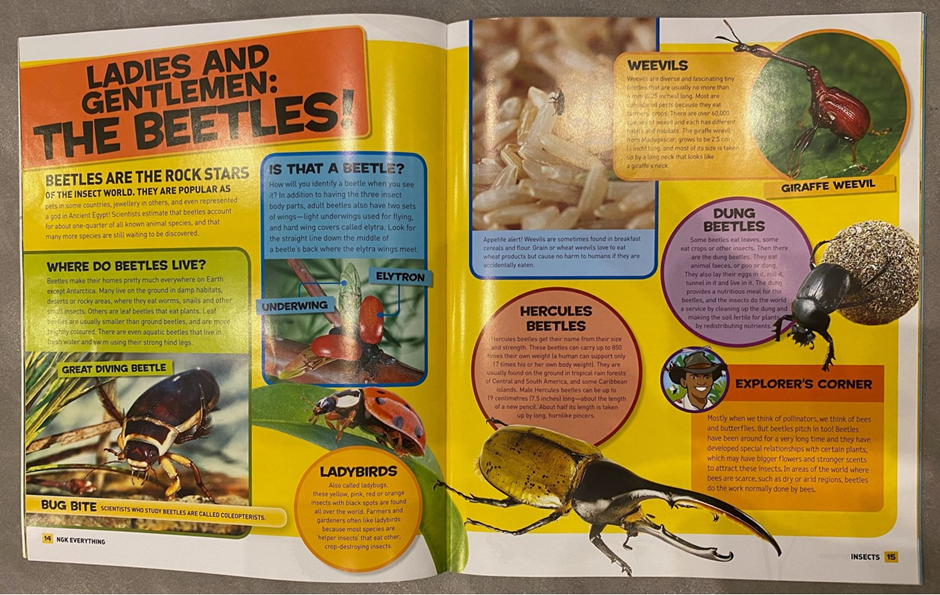
Well, the researchers give some incredibly interesting reasons as to why their research gave them these results. In both the museum and in the classroom using classroom resources, there were lots of objects that could have distracted the children from the 6 insects that were the focus of the lesson. The new environment of the museum has lots of visual distractions – as there are often lots of insects in one display case. And in non-fiction books, there is often quite a lot of information jam-packed onto one page; the insect the children are learning about might not even be the central focal point of the page. Both aspects may have interfered with word learning.
Children may have best learned using the museum resources in the classroom because they were novel objects, but the environment was familiar. Children often get used to the decoration of their classrooms, so they aren’t too distracted by their surroundings during their day-to-day experience in the classroom. Also, an important factor to consider is that the museum resources were boxed specimens that the children could pick up and move around. To inspect an object in detail, we often hold this object close to our faces, so it completely takes up our field of vision. The way these boxed specimens were held would limit visual distractions so the children could concentrate on all the details of that particular insect!
Well, there you have it, word learning is boosted in the classroom using amazing resources from our local museums. Now, this doesn’t mean that classroom resources don’t help word learning, or that we should stop visiting museums. The researchers did find that children learned words in both situations, but the children who were taught in the classroom using museum resources were able to better remember the insects and were able to better generalise to similar looking insects, than those who were taught using classroom resources or in the museum. It’s incredibly important for us all to remember, no matter what age we are, that museums are so much fun, they are rich learning environments and are invaluable resources!
Full photo credit:
Lester, N., Theakston, A. &Twomey, K. (2023). The role of the natural history museum in promoting word learning for young children. Infant and Child Development, e2400, 1-17.
Discover more from Research Hive
Subscribe to get the latest posts sent to your email.
 Research Hive