Author: Schenelle Dlima // Editor: Erin Pallott

Did you know that Manchester is the first city and region in the UK to achieve the World Health Organization age-friendly status? This means that Manchester strives to ensure its ageing citizens are able to maintain good health, forge strong social and cultural connections, and have access to high-quality employment opportunities — all of which promote healthy and active ageing.
High-quality research is one of the pillars of this achievement, and the University of Manchester is at the forefront of ageing research. The Manchester Institute for Collaborative Research on Ageing (MICRA) brings together over 300 researchers from different disciplines who are addressing key questions on how ageing affects our biology, health, and society.
How is the cost of living crisis impacting older people from ethnic minority communities? How is the skin involved in the ageing process? What are the challenges to sustaining employment among older people? These are just some of the wide-ranging questions researchers from the MICRA are trying to answer.
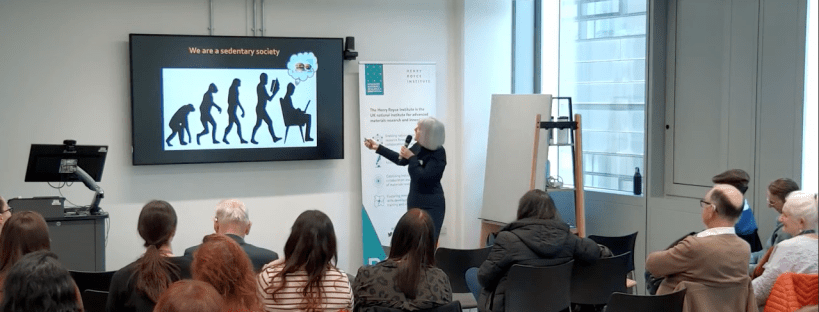
The MICRA held its annual research showcase on 3rd April 2023 at the University of Manchester. The showcase included short presentations by researchers from the Faculties of Science and Engineering; Biology, Medicine, and Health; and Humanities. The showcase concluded with an insightful talk by Professor Janet Lord on “Human Ageing: The Good, the Bad and the Unexpected”.
Curious to know more? We’ve summarised the 3 most interesting takeaways from Professor Janet’s guest talk.
#1: Can restricting your calorie intake help you live longer?
Since as early as the 1930s, experiments have been conducted in several species like rats, fruit flies, worms, and primates to test how caloric intake affects ageing. Although the experimental conditions differed, most of these studies found a similar trend — animals that had their calorie intake significantly restricted lived longer, as seen in this study conducted in primates.
However, testing this hypothesis in humans comes with challenges, as caloric restriction may be hard to maintain and may be ethically questionable in clinical trial settings. In the real world, the dietary habits of Okinawan Japanese may support the hypothesis of caloric restriction for a longer life. Okinawa is an island in Japan that has the highest number of centenarians (people who are older than 100 years) in the world. They live by a tradition of “leaving the table hungry”, meaning they never eat to the point of being stuffed. Okinawan adults consume 80% of the calories recommended in the UK. When the health of Okinawan Japanese was compared with that of their American counterparts, the Okinawan Japanese had better cognitive health and lower rates of cancer and heart disease.
Caloric restriction on a population level is not going to catch on, but Professor Janet presented a couple of alternatives. Intermittent fasting, which involves cycles of eating and fasting during the day, had positive effects on lifespans in animal studies. The second alternative is repurposing existing drugs that mimic caloric restriction. For example, metformin — a drug used to treat type 2 diabetes — is being explored as a possible drug to extend one’s lifespan. The TAME Trial (Targeting Aging with Metformin Trial) will provide metformin treatment to 3,000 adults who have their first age-related disease like dementia or heart disease. The researchers aim to find out whether metformin delays the onset of a second age-related disease. The hypothesis is that metformin influences biological processes involved in the development of age-related diseases.
#2: Does moving less contribute to modern ageing?
We all know that regular physical activity is associated with myriad health benefits. But how does being physically inactive influence how we age? Professor Janet set out to answer this by studying the physiologies of 125 lifelong cyclists aged 55–79 years. To be eligible for the study, men had to be able to cycle 100 km in under 6.5 hours, while women had to be able to cycle 60 km in under 5.5 hours.
The researchers took blood samples and muscle biopsies from the cyclists, and also analysed the functioning of multiple organ systems. These lifelong cyclists had less fat stored in their bodies, maintained their metabolic health, and did not lose their overall muscle mass and strength.
What does this research tell us? There are intrinsic factors associated with the normal ageing process (like thinning of the bones and reduced cardiopulmonary functions). However, we may have been told that changes like our food taking longer to digest and loss of muscle are a normal part of ageing. This research says otherwise — it’s possible to maintain our metabolic health and overall muscle strength even as we get older, and regular physical activity may play a part in this.
#3: Immunity, the thymus, and ageing
Our immune system changes as we age, and this is best exemplified by how COVID-19 affects older people. Older adults were more likely to experience severe COVID-19 symptoms and die from the infection. To set some background about how our immune systems work, Professor Janet provided a crash course in immunology (much to all our benefits!). Our thymus, a gland that sits behind the sternum and between the lungs, is responsible for producing and maturing T cells. T cells are important immune cells, with subsets that “remember” specific pathogens they encounter and protect you from future infections caused by those pathogens.
So what’s the link between the thymus and ageing? The thymus is one of the first parts of our bodies that ages. When we’re around 25 years, the thymus starts becoming infiltrated with fat, meaning it cannot produce new T cells as well as it used to. This is why older people are more susceptible to severe symptoms when they get sick.
However, when Professor Janet looked at T cell production in the lifelong cyclists, she found intriguing results. The thymic output and thymic size of the lifelong cyclists were similar to those of younger adults aged 20–30 years. This was because the lifelong cyclists did not show any signs of age-related inflammation, or inflammageing, that normally contribute to the shrinking of the thymus. They also had high levels of interleukin 7 (IL-7), an immunity-related hormone that keeps the thymus healthy. IL-7 is produced by skeletal muscles. Given that the cyclists maintained their skeletal muscle mass, they were still able to produce IL-7 as they got older, contributing to their retained thymic functioning.
Professor Janet acknowledged that not everyone can be (or wants to be) avid and committed cyclists, so she set out to explore the minimum physical activity required to maintain your immune health. Using data from accelerometers, older adults who walked at least 10,000 steps daily had neutrophil-mediated immunity similar to that of young adults. Neutrophils are the most abundant type of white blood cells, acting as our immune system’s first line of defence against infections. Thus, Professor Janet recommends that if you’re looking to amp up your step count, aim higher to lower your inflammation!
______________________________________________________________________
If you’re interested in learning about research from the other presenters, you can watch the entire event on YouTube.
About Professor Janet Lord:
Janet Lord, CBE, is a Professor of Immune Cell Biology from the University of Birmingham and the Director of the MRC-Versus Arthritis Centre for Musculoskeletal Ageing Research. Her research focuses on the dysregulation of immunity in older age, in particular the decline in neutrophil function and how this compromises the response to infection and tissue injury. She aims to understand the mechanisms involved, and to develop novel therapies to improve immunity in older adults.
Discover more from Research Hive
Subscribe to get the latest posts sent to your email.
 Research Hive