Author: Jess Mackin // Editor: Erin Pallott
Integration of sustainable practices in a research environment may seem difficult due to the vast amount of single-use plastics and high energy consumption from equipment. In general, life sciences are responsible for ~1.8% of total global plastic production and labs can consume up to 6 times more energy than a midsize office building.
In 2018, UCL decided to make a change by forming Laboratory Efficiency Assessment Framework (LEAF) as an effort to deliver “sustainable and reproducible laboratory based research”. The University of Manchester (led by Dr Maggy Fostier) is now adopting LEAF in the effort to make our research more sustainable.
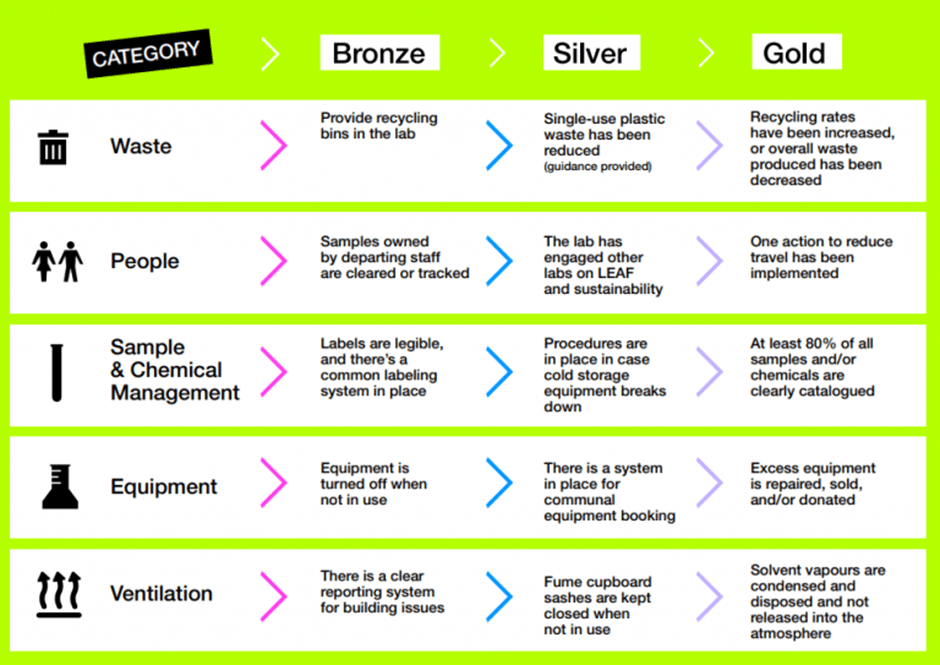
It’s the small changes that make a big difference! What small changes can we make?
Fume hoods: When used incorrectly, they consume more energy than you may think. If the sash is not closed properly, fume hoods can consume as much energy as 3 to 4 households! Therefore, doing a simple action of closing them when not in use can massively reduce energy waste in your lab.
Lights and plugs: Why do we pay less attention to lights that are being left on? At home we make a conscious effort to ensure plugs and lights are switched off during the day and overnight. However, I notice that at work, plugs and lights are being left on more often than not. This tends to occur in the more hidden side rooms, with less foot traffic. Before I go home, I check these rooms to switch off the lights and plugs, if appropriate. Otherwise, there is a high chance they are left on overnight. Unfortunately, this happens quite frequently, so our lab uses labels to indicate when a piece of equipment is being used. If there’s no label, it is switched off.
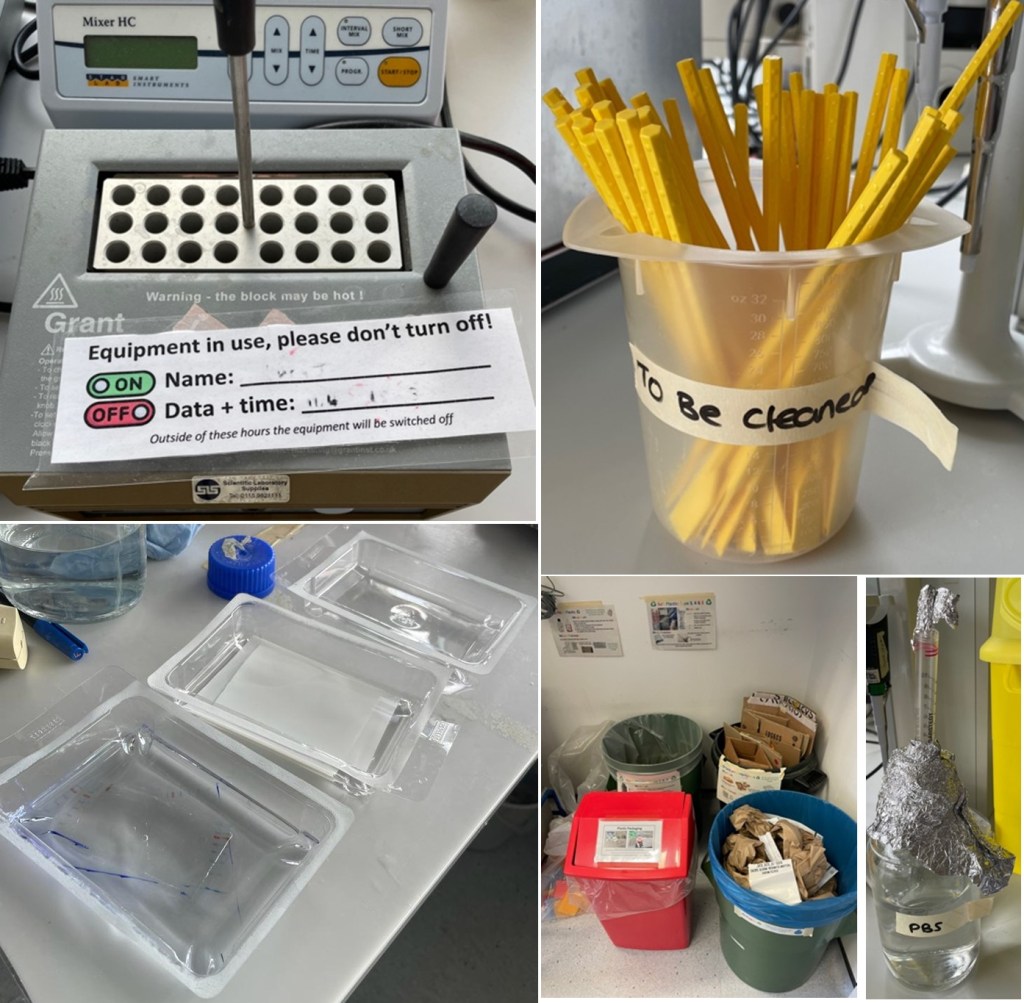
Reuse of “single-use” plastics: If sterility is not an issue, reuse some of your plastics. For example, in our lab we try think of ways to reuse our plastic a few times.
- Cell culture plate packaging – reused as a container to wash western blots
- Stripettes – Reuse a few times if it is not contaminated. For example, buffers like PBS
- Cell scrapers – instead of disposing after a single use, wipe clean with ethanol and reuse for gathering protein lysates
Swapping out pre-cast western gels: Pre-cast western blot gels use a lot of plastic. Why not try swapping them for hand–cast gels which use glass that can be reused? If you do not require a percentage gradient gel, this is a great swap!
Recycling and waste management: At the University of Manchester, there are multiple waste streams where we can recycle cardboard, polystyrene, hard and soft plastics, and glass. Over the last few years the signage and information around recycling has improved, making it easier to know what you can and cannot recycle.
How are suppliers making a change?
We can make efforts to reduce waste in our labs, but some things we cannot control, such as packaging of deliveries. Thankfully most, if not all, suppliers ship items in recyclable packaging, reducing the amount of plastic we use. They have also replaced non-recyclable shipping peanuts with either paper, recyclable soft plastic, or shipping peanuts that are water soluble and biodegradable.

Abcam bricks are a thing of the past! These bricks were made from PVC and we were unable to recycle them ourselves using University waste streams. They could be returned to Abcam, but there were difficulties in organising collections and disposal. Abcam antibodies are now delivered in cardboard packaging which makes it easier for us to recycle!
Aside from packaging of products, some suppliers are actively trying to improve the sustainability of their products by development of biodegradable or recyclable consumables such as cell culture plates, gloves and falcon tubes.
SUStainability depends on teamwork
A big part of making our research environment more sustainable is educating others and putting those words into practice. If some lab members are not engaged and involved, it can potentially set back a lot of hard work put in by others.
To overcome this, there are centralised posters highlighting how we process recyclable waste. There are also sustainability workshops being run by Maggy and seminars on how we can act more sustainably. We all know the saying “teamwork makes the dream work”. We can all work together to make Manchester more sustainable!
Discover more from Research Hive
Subscribe to get the latest posts sent to your email.
 Research Hive
2 thoughts on “A Brief Guide to Sustainable Practice in the Lab”