
Author: Subhajit Nath // Editor: Erin Pallott
Imagine a world where cutting-edge tech meets a warm, empathetic embrace – that’s the beautiful reality being created for those who are journeying through the maze of Alzheimer’s. In healthcare, artificial intelligence (AI) isn’t just some cold, robotic tool; it’s like a guiding light, a supportive hand to hold when the path gets rocky. Now, the latest science fuses innovation with human compassion to transform how we approach this heartbreaking disease. Join us on this mission of improving lives with this new technology.

But here’s the thing – the AI breakthroughs we’re talking about, are so much more than just crunching numbers and data. Sure, there is brilliant coding and various algorithms under the hood, but it’s more than that. Nowadays, we’re using AI to detect Alzheimer’s in the early stages (in some cases some predictive models have been established that could detect the disease years before previous tests!). With AI, we can understand the difficulties of the patients, understand them in depth and formulate therapies using the fundamental concepts of the disease. All these would make it easier for the patient to be treated. It’s technology, but with a big heart beating at its core.
What is Alzheimer’s Disease?
Alzheimer’s is a progressive brain disorder that slowly destroys memory and cognitive abilities. It is the most common form of dementia, characterised by abnormal protein deposits (amyloid plaques and tau tangles) that disrupt communication between neurons and eventually cause brain cell death.
This disease has a lot of emotional impact too. When people who are closest to you can forget their loved ones, and day by day the situation gets worse, it becomes very painful. The patient gradually forgets everything! We know human beings are social animals. So we hope, we bond, we think when we have something to share with our loved ones. We all know how much human connection, especially family, is important to us. This is the reason diagnosing and eradicating it, will be a major target concern for the scientists of this century.
But why use Artificial Intelligence?
For the treatment of Alzheimer’s disease and other forms of dementia, a drug named Galantamine is widely used as medication. Unfortunately, the active compounds required to produce this drug aren’t commercially available. They need to be extracted from daffodils, but this process is time-consuming. Additionally, factors like weather and crop yields can impact the drug’s availability and cost.
Aside from therapeutics, AI has proved useful multiple times in terms of accuracy and sensitivity, objective assessment, predictive modelling, efficiency and scalability, and biomarker identification. This makes AI a very good tool to use against Alzheimer’s disease and helps in the early detection of it.
How AI Enables Early Alzheimer’s Detection
Early diagnosis is very crucial for timely interventions and better disease management. AI techniques like deep neural networks and machine learning models can analyse various data sources to detect subtle signs of Alzheimer’s before significant symptoms appear:
Speech Analysis – AI techniques can analyse acoustic features (such as pitch, tone, and speech rate) and linguistic patterns (such as vocabulary richness and syntactic complexity or sentence structuring) in spoken language. These patterns can serve as potential indicators of cognitive decline or neurological disorders. For example, changes in speech fluency, word-finding difficulties and abnormal pauses may suggest early cognitive impairment. These AI models to detect early cognitive impairment showed to have 70-80% accuracy.
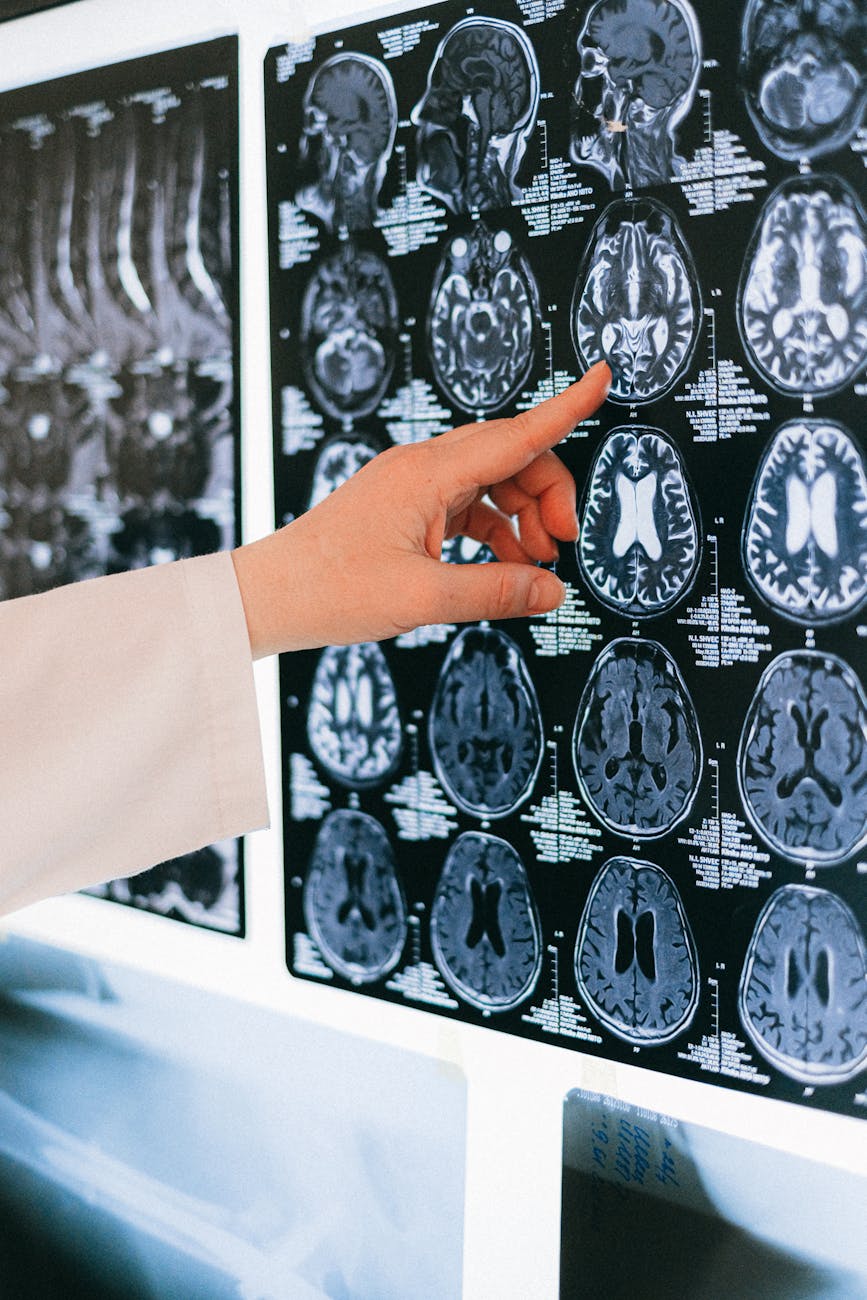
Brain Imaging – AI algorithms can analyse structural magnetic resonance imaging (MRI) scans to identify brain abnormalities associated with Alzheimer’s disease. Brain atrophy patterns, particularly in regions like the hippocampus and entorhinal cortex, are indicative of Alzheimer’s.
Sensor Data – AI models can process data from various sensors (wearables, eye-tracking devices, accelerometers, etc.) to monitor individuals’ behaviour and functional status. Early changes in mobility, sleep patterns, or gaze behaviour may signal cognitive decline or other health conditions.
By leveraging AI’s ability to process multimodal data and detect intricate patterns, healthcare providers now have a powerful tool for proactive screening and early diagnosis. This paves the way for timely interventions, clinical trials, and personalised care plans to improve outcomes for Alzheimer’s patients.
How early detection is done: The process
How we develop and utilise these tools is the most important thing in understanding this whole new advanced detection process.
Advanced AI like artificial neural networks and support vector machines are making early Alzheimer’s detection way more accurate and efficient than ever before.
Artificial Neural Networks (ANNs) are used to detect Alzheimer’s disease by analysing brain imaging data, such as MRI scans. The process involves extracting relevant features from these images, which are then processed through interconnected layers of virtual neurons. The ANN learns to identify patterns associated with Alzheimer’s by training on labelled examples and adjusting its internal parameters to minimise errors. Once trained, the network can classify new brain images, predicting whether an individual has Alzheimer’s based on the learned patterns. The final output provides an assessment of Alzheimer’s risk, typically as a yes/no classification.
Support Vector Machines (SVMs) are used in Alzheimer’s detection by analysing brain imaging data from MRI or PET scans. The process involves extracting specific features from these images, such as pixel intensities or patterns. SVMs then determine an optimal boundary that best separates healthy brains from those affected by Alzheimer’s, maximising the margin between the two classes. Once trained, SVMs can predict whether new brain images indicate Alzheimer’s by using this learned boundary. This approach serves as a valuable tool for clinicians, supporting early detection, timely diagnosis, and intervention in Alzheimer’s disease.
These new technologies are pretty amazing – they don’t just help doctors diagnose Alzheimer’s quicker, but they open up opportunities for customised treatment plans tailored to each person’s needs. By combining the power of tech with good old-fashioned compassion, science is seeing AI make a real difference in Alzheimer’s care. It’s giving hope to so many people struggling with this disease.
At Massachusetts General Hospital, researchers harnessed deep learning to develop an incredibly accurate model for detecting Alzheimer’s risk – a staggering 90.2% accuracy rate – simply by analysing routine brain MRI scans, regardless of age or other factors. Cutting-edge sensors like AltumView’s Sentinare 2 use AI to continuously monitor seniors’ movements and activities, rapidly identifying emergencies like falls, calls for help, or wandering in those with dementia. On the diagnostic front, RetiSpec’s pioneering AI algorithm can spot signs of Alzheimer’s in eye scan results up to two decades before symptoms emerge, opening doors to early intervention. Moreover, AI’s ability to comb through vast, multidimensional data is unveiling hidden patterns that deepen our understanding of the disease itself.
As we push forward into this new era of healthcare, one thing is clear – when we bring AI and human empathy together in Alzheimer’s care, it’s a game-changer. We’re talking proactive treatments, personalised support, kind of the whole nine yards. Instead of just treating symptoms, we can actually get ahead of the disease with targeted solutions. It’s an inspiring collaboration between machine intelligence and human compassion. Innovation is the heartbeat of progress in healthcare, and AI is leading the charge into an exciting new era. As the brilliant scientist Dr. Michio Kaku put it, “AI could revolutionize how we approach Alzheimer’s by helping us truly understand the complex mechanics behind the disease and develop customized therapies tailored to each person’s unique biology.“
These cutting-edge technologies like deep neural networks aren’t just fancy tools – they’re beacons lighting the way towards incredible breakthroughs in Alzheimer’s care.
The healthcare field is changing so rapidly these days. By embracing what AI can do, we’re on a path to fight Alzheimer’s with true empathy and grit. To fight this disease that devastates families, we can equip them with real hope and concrete solutions. It’s an inspiring vision – using cutting-edge tech without losing the human touch. For all those bravely battling Alzheimer’s, there’s a light at the end of the tunnel thanks to this powerful combo of AI’s capabilities and human’s irreplaceable warmth.
Discover more from Research Hive
Subscribe to get the latest posts sent to your email.
 Research Hive