
Author: Jenny Doak // Editors: Elan Shellard & Rashmi Danwaththa Liyanage
What is Homelessness?
For most people, the term ‘homeless’ conjures up images of a person sleeping on the streets. However, rough sleeping is only one form of homelessness. Crisis explains that other forms of homelessness include living in temporary accommodation, ‘hidden homelessness’ and statutory homelessness.
You may have noticed an increased news coverage of homelessness recently. This is because, in the UK, homelessness is growing. In my city, for instance, the ‘red tent camp’ attempting to provide shelter for rough sleepers has caused controversy- with Manchester City Council repeatedly removing the tents. Whilst the general public tends to avoid engaging with people who are sleeping rough, there is significant engagement in the ongoing debates surrounding housing as well as a media storm, making it difficult to ignore this severe housing issue.
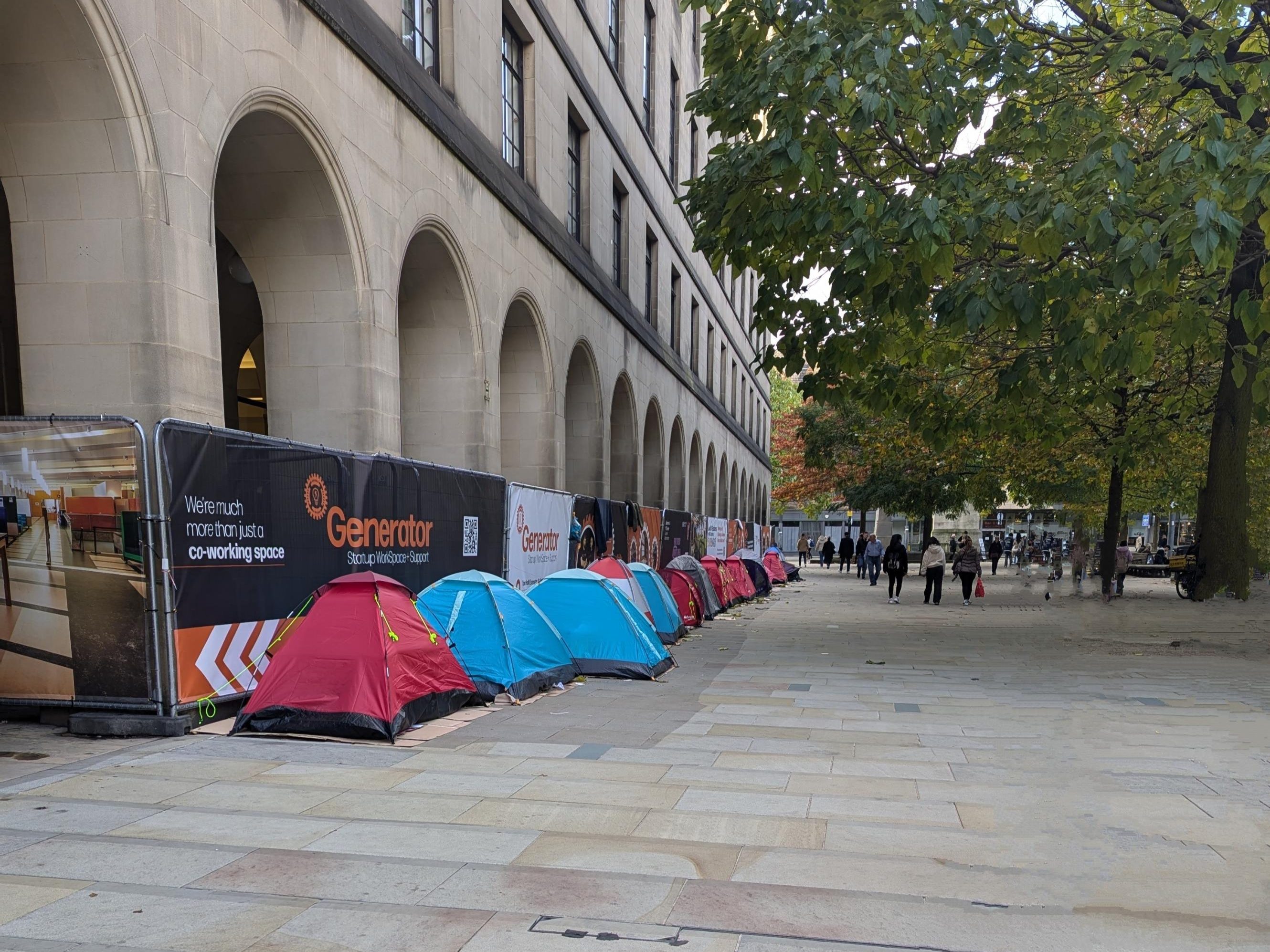
Rough Sleeping
Rough sleeping, the most visible form of homelessness, is on the rise. The Rough Sleeping Snapshot provides an approximate number of people who are currently sleeping rough. The most recent figure, calculated in 2024, is 4,667. This number has risen for the third year in a row and is a 20% increase since 2023. A variety of methods are used to capture this approximate value, taking place on a single night in autumn. While the snapshot does help recognise how many people are sleeping rough, it has been criticised as ineffective in rural areas and does not capture individuals who may be curating invisibility, potentially to shelter from violence, authorities, or to maintain safety.
Hidden Homelessness
Many people experiencing homelessness are at higher risk of violence and abuse when sleeping rough and will therefore choose to sofa surf, live in temporary accommodation or use public but private spaces like public toilet cubicles or hospital waiting rooms to shelter themselves. The term for this experience is ‘Hidden Homelessness’. Women, young people and minority ethnic groups are more likely to experience homelessness of this nature. Due to its dynamic and often unseen nature, it is very difficult to capture data on hidden homelessness. Society can become fixated on the data we do have, currently with a major focus on the Rough Sleeping Snapshot, using skewed data as an evidence base for initiatives and schemes. This ignorance of missing data leads to the typical profile of an individual sleeping rough being a white, young, male – policy must change to reflect the needs of the wider cohort.
How does homelessness impact health?
The life expectancy of people experiencing homelessness is, on average, 30 years lower than the general population. The reasons for this are numerous. Predominantly, the effects of having no shelter can comprise a lack of access to protection or warmth, clean water or the ability to maintain hygiene. This may also take the form of a lack of access to kitchen facilities and limited access to gas or electricity, which can impact heating, food preparation, phone charging, and more in other forms of homelessness. Those in temporary accommodation often experience overcrowding, which can lead to a heightened risk of infection. Many forms of homelessness, particularly sofa surfing, can leave individuals feeling indebted to the person providing shelter. This can be an issue for women, some of whom must use ‘survival sex’ in return for accommodation.
The slow acknowledgement of people experiencing homelessness as individuals, who are in such a situation due to societal impact rather than individual choice, also has an impact on life expectancy. The sluggish recognition of this point has not been helped by MPs like Suella Braverman who recently took to social media to exclaim that “…we cannot allow our streets to be taken over by rows of tents occupied by people, many of them from abroad, living on the streets as a lifestyle choice.”. The rising numbers of people experiencing homelessness may, however, act as a symptom of a society which has yet to recognise this point.

Providing Healthcare to People Experiencing Homelessness
Providing all forms of healthcare to those experiencing homelessness can be subject to barriers. Delivering preventative measures and practices, including screening, nutrition, substance use, and mental health will, in most cases, be incredibly difficult to achieve in the context of the living conditions of a person experiencing homelessness. This extends to primary care and ongoing treatment. Many GP practices request an address on registration – although the address is not necessary, it presents a severe barrier to many individuals. Those with access to primary care treatment may face the inability to safely store medication or comply with treatment. This may include forms of physiotherapy, appropriate re-dressing of wounds, medications that need to be stored in a fridge, or nutrition. Barriers in more acute care often include a lack of referrals or discharges to unsafe accommodation. Sharing information across different departments and specialities within healthcare is difficult. However, this difficulty can be strained and become even more complex when attempting to follow a service user who may not have a set place of residence. Particularly within a system that relies on service users residing in one place.
Inclusion Health
‘Inclusion health’ describes a field that attempts to prevent and address adverse health outcomes to those whose living standards are affected by social determinants of health. Many would describe most of these groups as socially excluded, often due to moral judgements from society. This term acts firstly as a reminder that, whilst our medical systems are progressing, members of society are still being left behind. It also acts as a driver for frameworks and initiatives to bring resolution and treatment into action.
In 2022, 42 integrated care systems (ICS) were formally established, building on healthcare systems which already exist. The ICSs strive to connect health and social care, bridging the gaps too often experienced by service users. Special attention is paid to areas of healthcare focusing on those experiencing homelessness, as a group that this system was designed to assist. However, there is little evidence to suggest where these gaps lie nor how to provide wraparound care for service users experiencing homelessness. We are now working to explore the experiences of people living with homelessness and how the healthcare systems have interacted with them, looking to improve services and recognise the need for inclusion health. The action of increasing the accessibility of healthcare services for those experiencing homelessness is just one thread of the fabric of a society that could choose to work together with those who have been socially excluded. Expanding access to healthcare services for individuals experiencing homelessness is just one strand of the larger fabric of a society that could choose to work together with those who have been socially excluded.
About the Author:
Hi! I’m Jenny, and I am a Registered Adult Nurse. I am in my first year as a postgraduate researcher at the University of Manchester and am very interested in inclusion health and inequalities in health care. I am particularly interested in the experiences of women in healthcare. Alongside my PhD, I work at Leeds Beckett University as a senior lecturer in Nursing. Please feel free to get in touch at Jennifer.doak@postgrad.manchester.ac.uk or j.doak17@gmail.com
Discover more from Research Hive
Subscribe to get the latest posts sent to your email.
 Research Hive
One thought on “Why Does a Person’s Life Expectancy Drop by 30 Years if they don’t Have a Home?”