
Author: Cherene de Bruyn // Editor: Sophie Alshukri & Oliver Hartley
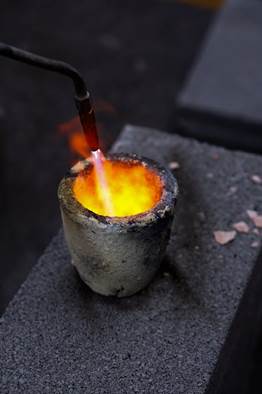
Forging metal. Photo from Pexels
In his book, The Art of Peace (1991) Morihei Ueshiba, founder of the martial art of Aikido, wrote: “Iron is full of impurities that weaken it; through forging, it becomes steel and is transformed into a razor-sharp sword. Human beings develop in the same fashion.” Now, I am no swordsmith or aikido master, but I know that forging iron is not about brute force. Instead, it requires specific materials, the right tools, and an abundance of fuel. It also requires an experienced forger equipped with patience and perseverance. Oddly enough, this is not a bad metaphor describing what it takes to become an excellent Postgraduate researcher (PGRs or PhD students). Like iron, PGRs are also formed through a specific process; they, too, require the right conditions, skills, knowledge, and equipment to excel in the PhD journey.
But here is the thing about iron: it can cool down quickly, meaning you cannot shape it in one go. The shaping process requires multiple trips to the forge. The same holds true for PhD research. High-achieving PGRs and good research, much like iron, will inevitably pass through many fires. Some of these fires are self-inflicted, others appear unexpectedly, some lie completely outside a researcher’s control, and a few are simply unavoidable parts of the process. One fire that blazes particularly bright early in the PGR journey is the PhD Confirmation process .
Depending on where you study, the process goes by many names: Confirmation of Registration, MPhil to PhD upgrade, Confirmation of Candidature, Confirmation Review, Transfer Review, Transfer Viva, and even MPhil to PhD Transfer. Regardless of what it is called, for PGRs, nearing the end of their first year, the PhD Confirmation experience is stressful. For many, it feels less like a milestone and more like scaling a mountain in flip-flops[1]; overwhelming, unsteady, and downright daunting. No wonder many view the Confirmation process as a hurdle. In some ways, it is, but at its core, it is an important (and overlooked) developmental milestone. I think it is more useful to think of the Confirmation as a crucible, a tool for forging PGRs and their research into a more refined version, setting them up for success. This, of course, doesn’t mean the Confirmation process is easy or the experience is fun. Whether it will be a transformative experience ultimately depends on the PGR themselves.
What is it, and why is it scary?
If the Confirmation is such an important part of the PhD journey, why do so many PGRs find it so intimidating? In the UK, as in other parts of the world, the Confirmation is the first formal review of the PGR’s progress and research – it is essentially a mini-viva.
Generally, it’s conducted by a panel consisting of an internal reviewer and the supervisory team. At many universities, the process requires the submission of a few documents and a report, followed by a more formal presentation and interview session. Some Confirmations include presentations, but there is almost always (guaranteed) a discussion with the PGR regarding the experimental design, methodology, preliminary results, timeframes, budget, and the skills required to undertake this research.
In a nutshell, the Confirmation process is an opportunity for the PGR to showcase what they have done in the first year and the plans they have for the research ahead.
Preparation is key
Successful Confirmations are not just about ticking boxes. To prepare for the Confirmation, PGRs need to set time aside to plan, get organised, and edit. This will require checking in with the supervisory team, digging into the PGR handbook, and consulting the University’s Doctoral Academy for the specific requirements and the format of the confirmation. The best advice? Don’t wing it. It is better to be prepared, to know what is expected, plan accordingly, and submit on time, with all the documents ready and available in hard copy on the day.
That said, very few PGRs conducting empirical research will have had the chance to set up experimental studies in their first year, either due to funding availability, ethical approval, or collaboration agreements that need to be signed. You are not alone. PGRs who fall into this boat might start to feel an overwhelming sense of dread, causing them to panic and making the Confirmation even more stressful.
A common reason PGRs experience anxiety during their Confirmation is that they feel they haven’t done or know enough. This is where imposter syndrome creeps in, causing PGRs to doubt themselves, the value of their research, and the progress they have made within the first year. Feelings of being underqualified, inauthentic and inadequate are especially prevalent among women pursuing doctoral degrees, especially those from marginalised and minority backgrounds. Feeling anxiety about the Confirmation process is normal. Pro tip: If it is affecting your performance or mental and physical well-being, reach out to your Supervisor or the University’s Wellness team. It’s why they’re there.
Discovery in discomfort
During the preparation stage for the Confirmation, PGRs might become tempted to get the submission over with. This urge may come from internal anxieties, pressure, and the desire to focus on something else. Looming deadlines can push PGRs toward box-ticking rather than thoughtful preparation. But the Confirmation is not an administrative blockade. Instead, take a moment and use it as a mindful stop in the PhD journey.
Every PGR journey is different. They are shaped by different challenges and research contexts. Yet, one common thread that binds all PhD journeys is discomfort. Not the existential or financial discomfort that comes from burnout, stress, or failure. But the discomfort born from focused and deliberate productivity. It comes from spending hours, or even days, grappling with ideas, refining concepts, and analysing lab results. As Martin A. Schwartz writes in his 2008 essay titled The importance of stupidity in scientific research, “What makes it [Ph.D. research] difficult is that research is immersion in the unknown”. Feeling cognitive discomfort is part of the discovery process while PGRs immerse themselves in the unknown – the path ahead has not been lit or laid. Impactful research often goes where no one has gone before. Discomfort as such is not a flaw; it is a necessary part of the process. In other words, the feeling of discomfort, the sense of not knowing, and pushing through is not a sign of failure; it is evidence of work and a sign of progress.
Think of the Confirmation not as a barrier, but as a checkpoint on the way. It offers an opportunity to pause and take stock. In a blog by The Thesis Whisperer, the author recommends using the Confirmation as an opportunity to reflect on why the research is exciting and to demonstrate the significance and viability of the research. The Confirmation is the first stop to help research teams determine whether the foundations built (i.e., skills developed and literature reviewed) by the PGR in the first year are strong enough to build upon in the second year, and if it is necessary to take additional steps on the road to discovery.

Think of it as a process that is sharpening your skills
The PhD journey is full of opportunities that will challenge and stretch Postgraduate Researchers (PGRs) intellectually, emotionally, and professionally. It is part of the process of becoming a well-rounded researcher. The Confirmation is just another one of those opportunities. Yet, it is often framed as a hurdle, something to get over, but this framing misses an important point. It is a checkpoint and a training ground. At its core, it can be viewed as a layered exercise in developing three essential skills: writing, speaking, and critical thinking. These are skills crucial for clear and confident academic communication (remember: “publish or perish…”). These three skills are not distinct; they should be mastered together. They are interdependent skills that are intertwined. Good speakers are good because they read and write a lot. As MIT late Professor Patric Winston once said, “Your success in life will be determined largely by your ability to speak, your ability to write, and the quality of your ideas, in that order.” I don’t think many PGRs realise the importance of these three skills.
A well-structured submission tests both a PGR’s writing ability and their skills to articulate complex ideas clearly, reflect on progress, and plan for the road ahead. Writing, like speaking, is a craft that takes practice. Developing a writing routine by improving writing habits, setting up a writing schedule or joining a university writing retreat is a must. The same goes for oral communication. Presenting research clearly and coherently to peers, supervisors, or broader audiences, even informally, sharpens clarity and is an opportunity to identify gaps, invite questions, and refine delivery. During the Confirmation, you can bet that the review panel will question and probe; that is their function. The presentation and discussion session is an opportunity for the PGR to engage thoughtfully, showing their written and verbal communication skills. Many PGRs miss the opportunity to become excellent communicators because they treat the Confirmation as something to survive rather than an opportunity to learn and grow. However, if approached with intention, a well-prepared Confirmation becomes a rehearsal for future conversations: a dry run for future mingling in hallways, networking at conferences, and engaging with peers at workshops.

Conclusion
Yes, I know Confirmations can feel like big obstacles. But in reality, they are an important developmental milestone that tests not only the viability of the research but the character and grit of the researcher. Having recently passed my own Confirmation, I have found it is not a gatekeeping process, but a crucible. A tool that refines both the research and the PGR. It can be a daunting process, requiring clarity, confidence and superb communication skills. It is not about proving you are perfect or that the next couple of years are flawlessly planned. Rather, it is an opportunity to reflect on progress, redirect research and sharpen core skills that will carry the PGR for the rest of their PhD. It’s an opportunity to refine the tools that are necessary for scientific discovery.
The process is not meant to be easy. Research rarely is. Like iron forged in fire, ideas are shaped through pressure, heat and time. And sometimes multiple times. The fires of deep work, reading, writing, and thinking are where real progress is made. Through preparation and practice, PGRs are “developed in the same fashion”, to borrow a few words from aikido master Morihei Ueshiba, until only a stronger and refined version remains. After going through the Confirmation process, PGRs should come out of it bolder with renewed purpose. You might also come out a little more confused and a little more grounded. And that is okay. That is still progress. Unlike metal, it is also important to acknowledge that people -that PGRs – need care, support, and time to grow. The goal isn’t to emerge unscathed from the Confirmation process, but to emerge stronger, more confident, and better equipped for the journey ahead.
So, for PGRs approaching the Confirmation, or PGRs who have just started their PhD journey, becoming a researcher, a good researcher, is a tough path. And the journey can be lonely and overwhelming. But don’t aim to just survive, use it. Set yourself up for success. The Confirmation is a rehearsal for future academic life. When approached with focused intention, it becomes a turning point, where the key skills of doctoral research: thinking, writing and speaking, are not only tested but transformed. Let the process sharpen your skills; you will be better for it. The Latin proverb “Fortes fortuna adiuvat“, commonly known as “Fortune favours the brave”, reminds us that if PGRs take charge and initiative, the Confirmation will lead to positive results and professional growth. The Confirmation process marks the first point where a PGR begin to change from a student into a scholar. Not because they have had to jump over hurdles (and there will probably be many), but because they have bravely stepped into the fire and came out changed. That is serendipity!
[1] open-toed sandals
About the Author
Cherene de Bruyn is originally from South Africa and a PGR at Liverpool John Moores University, in the School of Pharmacy and Biomolecular Sciences and the Forensic Research Institute in the UK. With a background in archaeology and physical anthropology, her current research focuses on clandestine grave detection using forensic ecology and remote sensing. You can follow her research on LinkedIn. She also dives into all things PhD life and productivity on her weekly Substack called BruynChild (pronounced brainchild).
Discover more from Research Hive
Subscribe to get the latest posts sent to your email.
 Research Hive