By Katie Lowles // Art by Isabel Rivera
In the early 1990s, the term ‘fast fashion’ was coined to describe an emerging business model, whereby retailers could have a garment on a shop floor and ready to be sold only 2 weeks after it had been designed. Taken on face value, fast fashion may seem like the ideal business model. Clothes companies make more money by meeting the demands of their style-hungry consumers, who want to buy cheap clothes and wear the newest trends as quickly as possible. However, in recent years, the fast fashion industry has faced global scrutiny of its environmentally destructive supply-chain.
Fast fashion has driven a shift in the way clothes are bought and used and as a result, a garment’s life-cycle is now shorter than ever. Clothes are manufactured from cheap materials and are not designed to last. Instead, they are worn a few times and then disposed of or rendered redundant once trends change. As a result, the average person now has 5 times as many clothes as our grandparents. In order to maintain momentum and keep churning out clothes for the consumer, supply chain efficiency is crucial. Unfortunately, the quickest option is rarely the most environmentally ethical solution and while the cost of a bang-on-trend garment may be astonishingly low, the environmental toll of the fashion industry continues to rise.
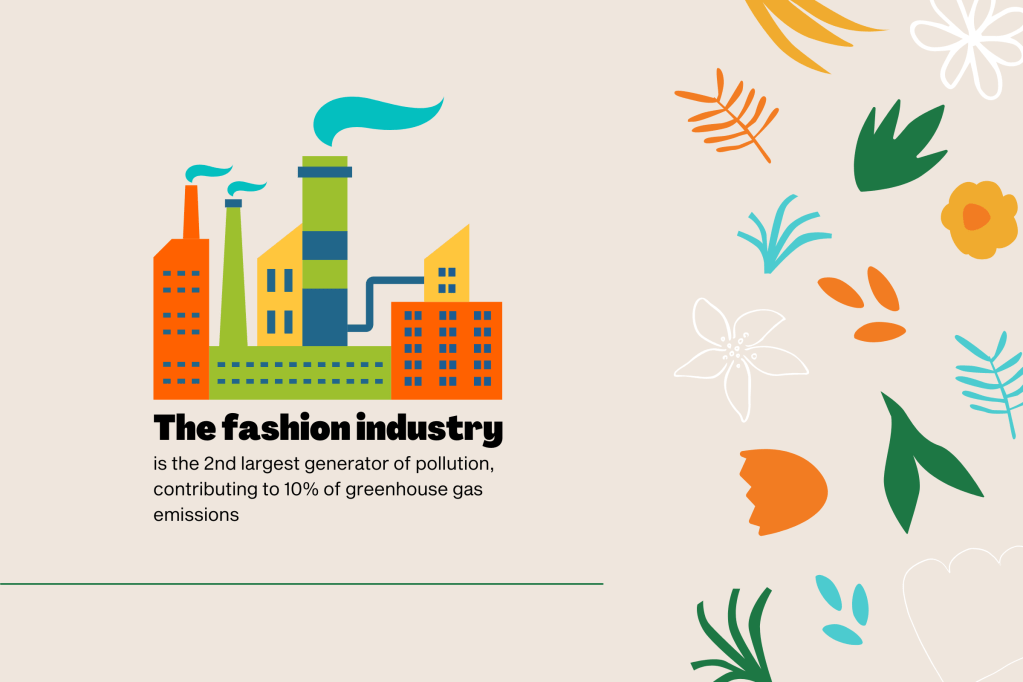
Behind only the oil-industry, the fashion industry is the second largest generator of pollution on Earth. In fact, around 10% of global greenhouse gasemissions are produced by the fashion industry. Textile manufacturing is a high-energy process and many countries still use coal-based energy to power their factories – leading to a huge carbon footprint and CO2 emissions. However, the largest contributor to energy use and CO2 emission is the production of the synthetic fibres, such as polyester and nylon. While synthetic garments have increased durability, strength and elasticity compared to garments made from natural fibres, they are very difficult to dispose of at the end of their life-cycle, as they often produce harmful and poisonous gases when burnt and are non-biodegradable when landfilled. Conversely, CO2 emissions associated with producing natural fibres, such as linen and hemp, is relatively low and the fibres are biodegradable. Even after leaving the factory; shipping, packaging and laundering clothing contributes to greenhouse gas emissions and energy consumption. To reduce greenhouse gas emissions and energy consumption, the industry must move away from synthetic fabrics and focus on producing natural fabrics from sustainable energy sources, as well as packaging and shipping in a responsible and sustainable way.
The volume of water consumed by the fashion industry in 2017 was equivalent to filling 32 million Olympic sized swimming pools. To put this in to context; to make just one pair of jeans and a t-shirt, around 19,000 litres of water are used. Not only does the fashion industry use huge volumes of water to manufacture its products, it also contributes a staggering 20% of global waste water. This waste water often contains toxic chemicals used to manufacture or dye clothes and is frequently released irresponsibly, resulting in disrupted local water supplies and damaged ecosystems. Knowing this, it is saddening to think that there are clothes in many of our wardrobes that have contributed to water scarcity and pollution – often in developing countries – that will never be worn or that are of such poor quality that they only survive a couple of outings. We are often encouraged to decrease our water consumption by taking shorter showers and turning off the tap while brushing our teeth. However, in comparison to the astronomically high water usage in the fashion industry, these small acts seem like a tiny drop in a huge ocean. A more impactful change could be to buy fewer clothes and be mindful of the environmental impact of each purchase.

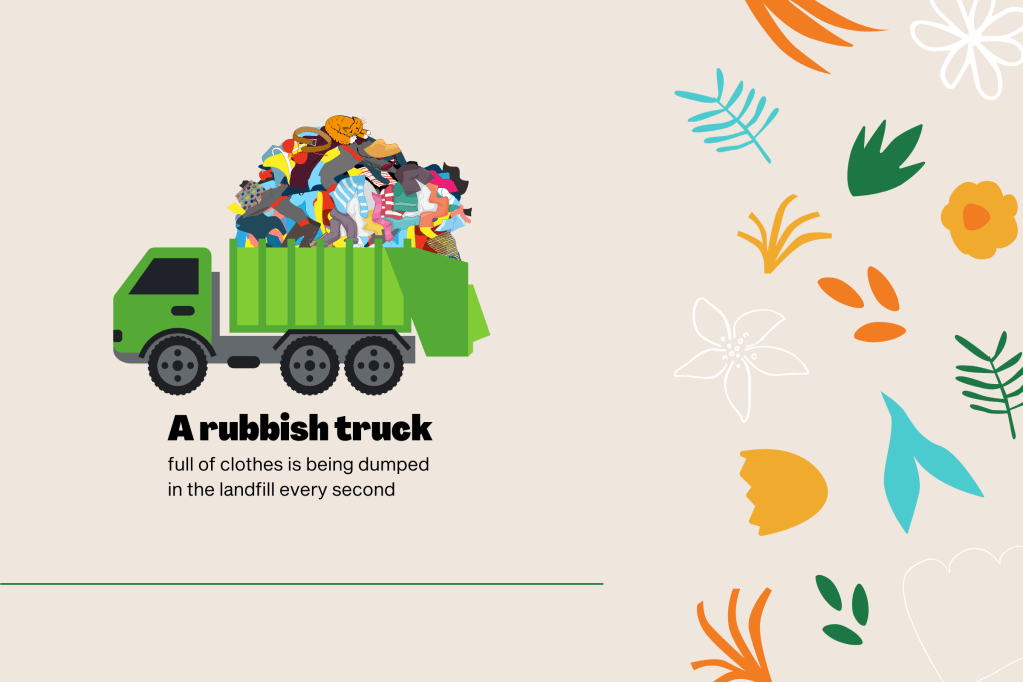
Over 90 million tonnes of textile waste is created globally every year. This is approximately equivalent to a rubbish truck of clothes being dumped in landfill each second. When we look at how the fashion industry has evolved over recent years, it is easy to see how this could be true. Instead of just 4 clothing collections per year – one in spring, summer, autumn and winter – many of the most well-known fast fashion brands churn out a new clothing collection each week. Consumers are encouraged to buy frequently and clever marketing strategies place a heavy emphasis on buying urgently, keeping up with trends and getting the latest looks now. While clothes made from synthetic fibres can’t biodegrade, they do still decompose and as they do, they release CO2 and methane into the air – polluting the environment and contributing to global warming.
As a business model, fast fashion is genius. The fashion industry becomes richer and the consumer has cheap access to the latest trends almost immediately. However, from production, to packaging, to distribution, to a garment’s eventual fate in landfill or the back of a wardrobe; the fast fashion industry is having a hugely detrimental impact on the planet, with little sign of slowing down. As awareness of the fashion industry’s huge role in climate change increases, buzzwords such as ‘sustainable’, ‘ethical’, ‘conscious’ are now making their way on to clothes websites and labels in a bid to display that an effort is being made to confront the darker side of fashion. However, it is imperative that the brands making these claims are held accountable and real changes to the industry as a whole begin to be made.
As consumers, we also have a responsibility to reduce our clothing-related carbon footprint. There are a number of easy changes we can make to our buying habits that will make for a greener and more sustainable lifestyle and reduce the overall global impact that our clothes have on the planet.
- Buy quality over quantity – spend money on quality items which will last a long time rather than lots of poor quality clothes.
- Check out a brand’s sustainability plan, which can often be found on their website. Do they really care about their environmental impact?
- Embrace in-person shopping rather than online ordering. Less plastic packaging and fewer delivery miles will cut the carbon footprint of your clothes.
- Shop vintage/second hand. Manchester is spoilt for choice in terms of vintage shops, and apps such as Vinted and Depop are an excellent way to buy and sell second hand clothes!
Discover more from Research Hive
Subscribe to get the latest posts sent to your email.
 Research Hive