Author: Nikkita Toudert // Editor: Caitlin Lewis
This post is part of a series of work experience projects with T-Level students from The Manchester College. At Research Hive, we have been thrilled to work with young people to produce their first written pieces.
The complete metamorphosis that caterpillars undergo to turn into butterflies is, in my opinion, one of the most extraordinary examples of change in the natural world! What seems like a simple insect growing into an adult is actually a complex biological process that involves genetics, hormones, and the complete reorganisation of the body. This process is known as complete metamorphosis and is what allows a caterpillar to transform into an amazing flying insect with completely different abilities. Scientists have studied this process for centuries as it provides important information about how living organisms grow, develop and adapt. The journey of caterpillar to butterfly reveals how complex nature can be and shows how cells can follow precise instructions to create an entirely new form.
The Caterpillar Stage
A butterfly’s life begins as a tiny egg, laid on a suitable host plant. When the egg hatches, a caterpillar emerges with one main purpose: to eat and grow. Caterpillars consume large amounts of leaves, storing the nutrients and energy needed for the next stage of development. As they grow, they shed their outer skin several times and slowly get bigger. Each stage between these moults is called an instar and allows the caterpillar to increase in size before it is ready for metamorphosis.
Inside the Chrysalis
When the caterpillar reaches its full size, it attaches itself to a branch or leaf and sheds its skin one final time to reveal a protective casing called the chrysalis. Although the chrysalis appears still from the outside, lots of major changes are taking place on the inside. Many of the caterpillar’s tissues break down through a process that is called programmed cell death, or apoptosis. These materials are then recycled and used to build the body of the adult butterfly. However, rather than just simply growing wings, the insect undergoes a complete reorganisation of its body.
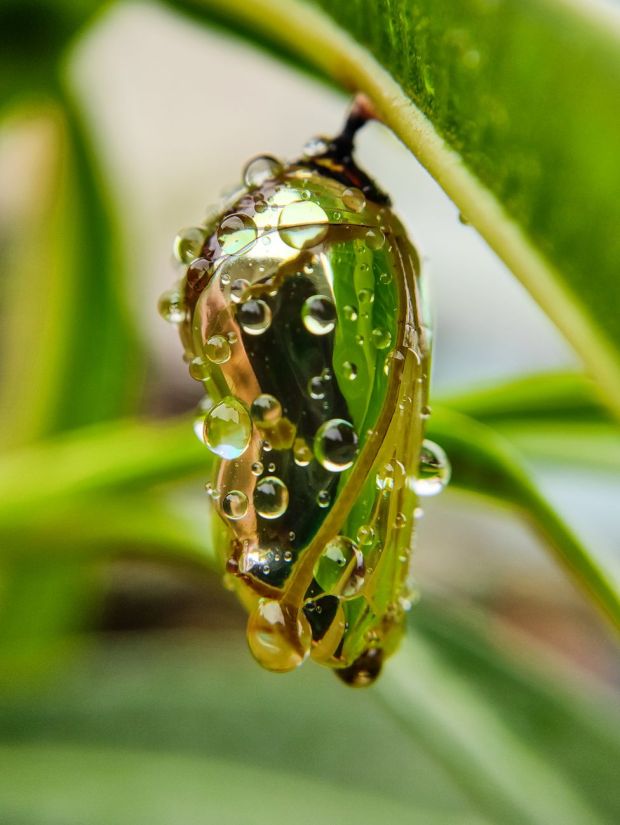
The butterfly develops from groups of specialised cells, called imaginal discs, which are already present inside the caterpillar but are only used during metamorphosis, where these cells divide rapidly to form the butterfly’s wings, legs, antennae, compound eyes, and reproductive organs. Therefore, the butterfly is not created from scratch but is formed by rebuilding the caterpillar’s body using recycled tissues and specialised cells.
The entire process is also controlled by hormones. Juvenile hormone keeps the insect in its caterpillar stage, allowing it to continue feeding and growing. As the caterpillar matures, levels of juvenile hormone decrease while another hormone, called ecdysone, increases. This hormonal change triggers the formation of the chrysalis and eventually, the emergence of the adult butterfly.
Emerging as a Butterfly
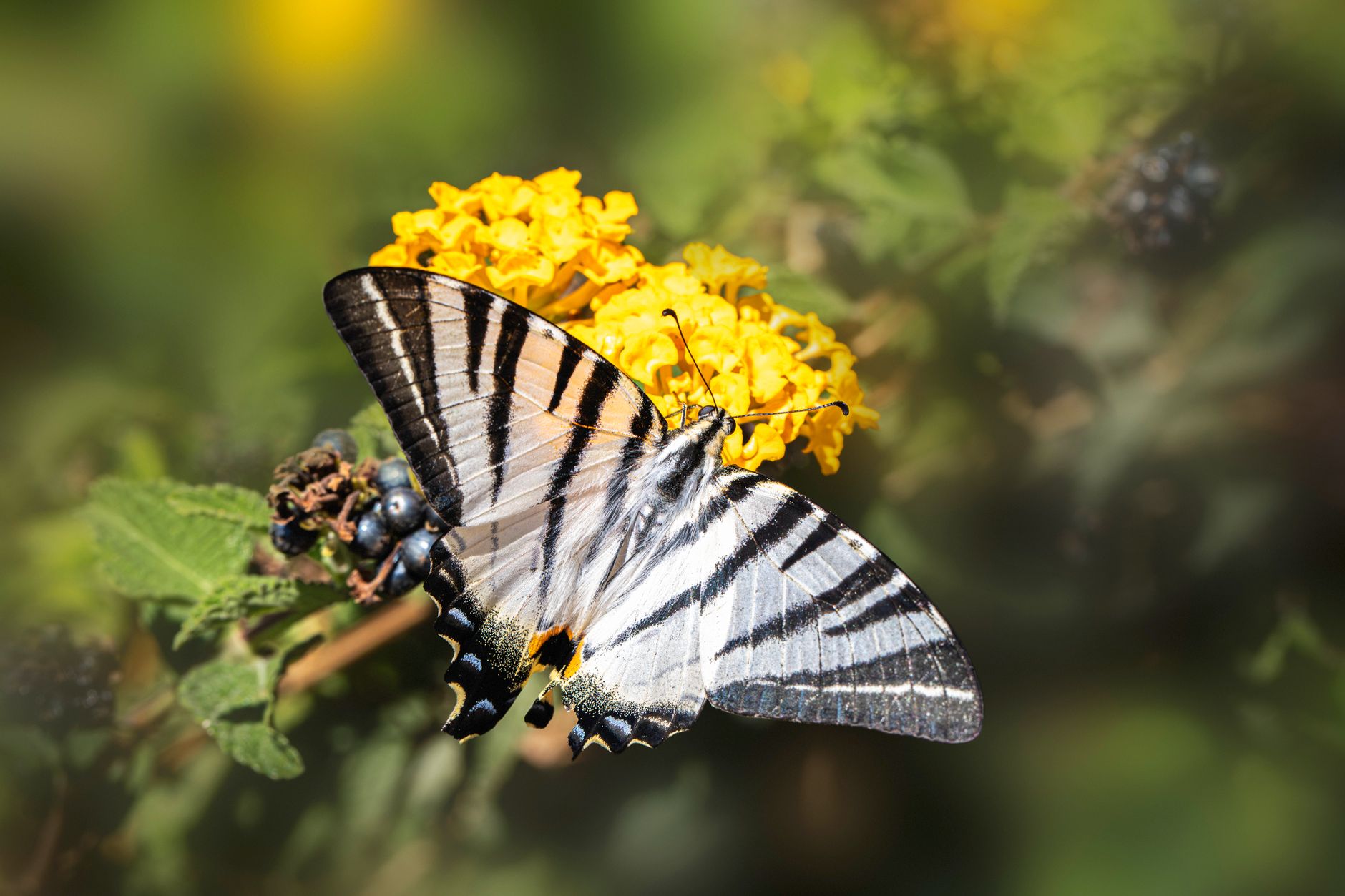
The amount of time spent inside the chrysalis depends on the butterfly species and environmental conditions such as temperature and humidity, so some butterflies might complete metamorphosis within a few weeks, while others remain inside the chrysalis for several months. When the development is complete, the butterfly breaks open the chrysalis with soft, folded wings. It then pumps a fluid called haemolymph through the veins of its wings, which causes them to expand to their full size. However, over the next few hours, the wings need to dry and harden before the butterfly is able to fly. Once airborne, its role changes from feeding on leaves to drinking nectar, helping to pollinate flowers as it moves between plants and reproducing.
Why Metamorphosis Matters
Scientists continue to study butterfly metamorphosis because it provides valuable insights into genetics, development, and tissue regeneration: from understanding how insects can break down and rebuild their bodies, researchers can learn more about how cells grow, specialise, and repair themselves. This research has even influenced the fields of regenerative medicine and developmental biology. Metamorphosis also demonstrates an important evolutionary advantage: by having different diets and habitats at each stage of life, caterpillars and butterflies avoid competing with one another for food, increasing their chances of survival.
Conclusion
Overall, the transformation of a caterpillar into a butterfly is a far more beautiful, natural event then what you can imagine! It is a carefully controlled biological process involving specialised cells, hormones, and genetic instructions that work together to produce a completely different adult form. From the hungry caterpillar to the delicate butterfly, every stage has a specific purpose that supports the insect’s survival .By studying metamorphosis, scientists continue to gain valuable knowledge about development, evolution, and regeneration, making this extraordinary life cycle one of the most impressive examples of adaptation in the natural world – at least in my opinion.
Discover more from Research Hive
Subscribe to get the latest posts sent to your email.

