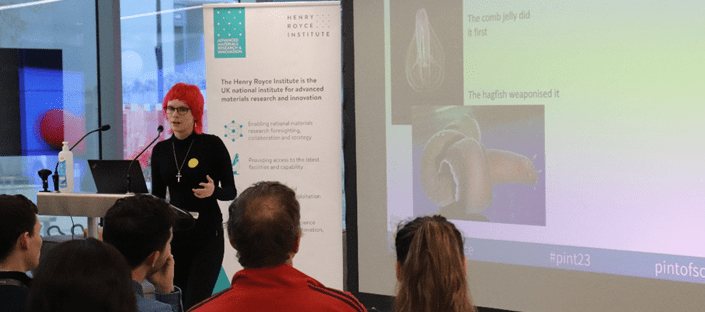
Authors: Erin Pallott, Ayobami Olanrewaju & Jill Merlini I don’t think we need to emphasise the importance of communicating research to the public. It is essential we keep a two-way conversation about how public money is spent, how research is conducted, and how our research is beneficial, in language understandable to all. This is already … Continue reading The Value of Public Engagement – Pint of Science Launch Event
Category: Research
Delirium — a snapshot of this serious cognitive condition
Author - Schenelle Dlima // Editor - Erin Pallott “My voice did not obey me. I tried to answer, but could only indicate yes or no.” “I had fantasies and was horrified: the nurses were dangerous. I was attending my own funeral.” “I have been from Heaven to Hell.” No, these are not lines from … Continue reading Delirium — a snapshot of this serious cognitive condition
Word Learning: Where do our children learn best?
Author - Phoebe Harding-Walker // Editor – Erin Pallott Language is a central component of the human experience. We utter thousands of words every single day to share our thoughts and feelings, express our interests, communicate our amazing ideas with others and much, much, more. But how do children master language? How do they learn … Continue reading Word Learning: Where do our children learn best?
Cervical Screening – We Need to be Honest About Uptake Barriers
Author: Erin Pallott This post contains mention and discussion of sexual trauma and intimate medical examinations, which some readers may find distressing. I have linked several resources at the very end. 23rd – 29th of January marked Cervical Cancer Prevention Week. Cervical cancer is the 4th most common cancer in women, and over 95% of … Continue reading Cervical Screening – We Need to be Honest About Uptake Barriers
Ig Nobel Prizes: Satirising Science since 1991
Author: Erin Pallott You might have heard of parody award ceremonies before, such as the Golden Raspberry Awards which mock the Academy Awards. But did you know of the annual award ceremony which satirises the most prestigious scientific award: The Nobel Prize? The 32nd First Annual Ig Nobel Ceremony was held on 15th September and … Continue reading Ig Nobel Prizes: Satirising Science since 1991
This Mortal Coil: A History of Death + Book Review
By Erin Pallott "For in that sleep of death what dreams may comeWhen we have shuffled off this mortal coil,Must give us pause: there's the respectThat makes calamity of so long life." - Shakespeare's Hamlet In Shakespeare’s most famous soliloquy, Hamlet philosophises on the anguish of life and a fear of death. “This mortal coil” … Continue reading This Mortal Coil: A History of Death + Book Review
UNDERSTANDING SLEEP TO IMPROVE YOUR LIFE
By Seyma Calisgan Sleep is a vital function that helps your body and mind to replenish and allows you to wake up renewed and refreshed. There are many questions one might have about sleep, including: What is sleep and why is it important? How many hours should I sleep? How does sleep affect my life … Continue reading UNDERSTANDING SLEEP TO IMPROVE YOUR LIFE
MUCUS! (Finish your lunch first)
Author: Erin Pallott You know the feeling. That scratch starts in the back of your throat, your whole head hurts, and only one nostril is working. Great, you’ve got a common cold. A first-class ticket to snot city. When you hear the word 'mucus', this is probably the first image that comes into your head. … Continue reading MUCUS! (Finish your lunch first)
Is your mind playing tricks on you? 10 common unhelpful thinking styles which can affect your mood
By Mia Bennion Typically, we don’t tend to question our brain or our thinking – if you think it, it must be right…right? Not necessarily! Thoughts are opinions, not facts! Our brain can be our best friend, helping to alert us to any danger, problem solve and granting us with creativity and imagination. Unfortunately, sometimes … Continue reading Is your mind playing tricks on you? 10 common unhelpful thinking styles which can affect your mood
The human placenta: the most successful organ transplant
By Chloe Brady Throughout pregnancy, the fetus (consisting of both maternal and paternal genes), must evade the maternal immune system. For this reason, the fetus has been previously described as the most successful organ transplant, tolerated by the mother for around 40 weeks. In the 1950s, biologist Sir Peter Medawar first recognised that pregnancy is … Continue reading The human placenta: the most successful organ transplant