Author: Cherene de Bruyn // Editors: Erin Pallott & Sarah Klingberg
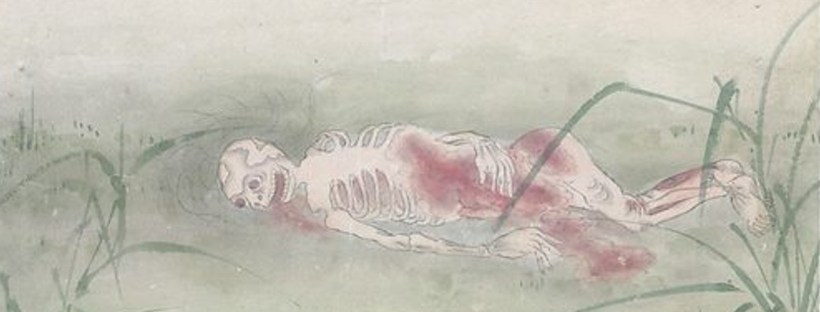
Cover image: Kusozu: the death of a noble lady and the decay of her body. Watercolours. Credit: Wellcome Collection Attribution Creative Commons Attribution (CC BY 4.0). Source: Look and Learn
Forensics of Death, Decay and Decomposition
Like many people, my first introduction to forensics and the decomposition of bodies wasn’t in a university laboratory— it was on TV.
I remember the episode of Bones, a police drama television series, where seven pairs of feet washed ashore. While their detached nature was puzzling to the police, it was the rather gruesome trip the fictional character, forensic anthropologist Dr. Temperance Brennan takes to the University of Hogansburg as part of the investigation that lingered in my memory like a bone sticking out from the ground. At the University, she explores the Body Farm. To the utter horror of her FBI agent partner, Seeley Booth, Dr Brennan was totally fascinated by the various decomposing human bodies. Like a macabre painting, discoloured, bloated, and partially skeletonised bodies were scattered across an area the size of a rugby field. At the facility, the impact of temperature, vegetation, insects, and water on the decomposition process was being studied. Oh, and the feet found at the initial crime scene, it turns out they apparently belonged to some of the “research subjects” at the Hogansburg Body Farm.
While scenes from this episode are fictional, the concept of an outdoor-based research laboratory, or so-called body farm, is based on the Forensic Anthropological Research Facility (ARF) at the University of Tennessee. Also called the “death acre”, after his 2003 true crime book, Professor William Bass and his team have conducted valuable research focusing on decomposition at the site since 1971. Forensic anthropologists, like fictional Dr Brennan and very real Professor Bass, develop and test methods to aid in the identification of unknown individuals from fully or partially decomposed bodies. The study of bodies and bones is useful for forensic investigations involving unidentified victims or cases where the cause of death is unknown or suspicious. Through taking several measurements and observing marks on the bones, forensic anthropologists have developed standardised methods for the identification of the deceased (including their age, sex, and population affinity) as well as the cause of their death (including any signs of trauma, illness, or disease).
But studying the decomposition of a body is a different kettle of fish. To get to grips with the factors that influence the decay of organic matter, forensic researchers trade their shiny white lab coats for hiking boots and head-to-toe coveralls. At these outdoor-based research laboratories, or forensic taphonomy facilities, researchers piece together insights from decomposing bodies that can be used to not only aid investigations but to restore dignity to victims who experienced possible violent and traumatic deaths and hopefully give family answers and closure.
To Study Death
The study of death is morbid, but from death we learn about life. By understanding the decomposition process, it can become a map for forensic investigators as they piece together the victim’s identity and the context of the crime. Like any map, it is full of twists and turns because the decomposition process is variable. The victims’ individual characteristics, the soil composition, moisture, environmental factors, insects, scavengers, and even clothing have a direct and tangible impact on how quickly or slowly a body decomposes. When identification is based on estimating the time-since-death (or the post-mortem interval) or the time-since-burial (the post-burial interval), it is crucial to understand not only what factors play a part in the process, but to what extent they influence the process across different regions and climates. To do this, forensic anthropologists draw insight from palaeontology.
Forensic Taphonomy
The term taphonomy was first used by palaeontologist Ivan Efremov in 1940 to explain the processes that affect organisms after death until they are discovered. Borrowing this concept, forensic taphonomy has developed as a subdiscipline of forensic anthropology and is interested in understanding the processes that alter or change the body from death until it is discovered. Through forensic taphonomy, researchers have determined that decomposition follows a predictable pattern from fresh, bloat, active decay, advanced decay, and skeletonisation. And because bodies decompose in the same pattern, figuring out the rate of change from one stage to the next is useful for victim identification. To study the macabre process of decomposition and the mysteries of putrefaction1, dedicated forensic taphonomy facilities are thus needed.
Forensic taphonomy research facilities generally consist of stretches of land where bodies are studied in various contexts (above and below ground) to identify any patterns or trends within the decomposition process. This is necessary because the decomposition process is variable. It is affected by both biotic (living – insects, bacteria, fungi) and abiotic (temperature, soil composition, moisture) factors. At these facilities, researchers study the process of decay across different environmental conditions (such as dry vs wet; indoor vs outdoor) and contexts (such as body placement; clothed vs unclothed; whole bodies vs dismembered bodies). This allows researchers to map various trends and patterns, understanding how the body decomposes across different conditions, body disposal methods, and climatic and environmental conditions. Researchers can study not only the process of decay but also how it impacts the surrounding ecosystem, including the soil, the vegetation, and the microbial communities. They can study the interaction of various scavengers, such as insects or wild animals, with bodies and learn how these interactions either speed up or delay decomposition.
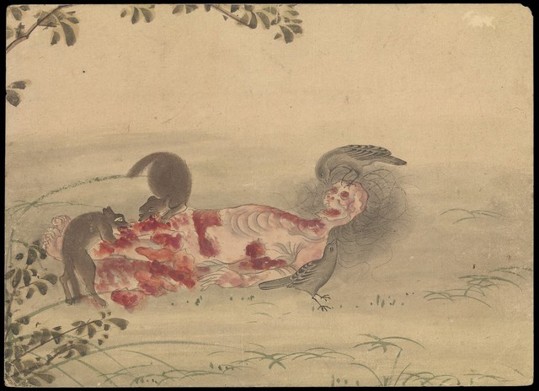
Understanding this variability across regions gives insight into the decomposition rate. This is useful for criminal investigations and can aid in the estimation of the victim’s time of death (post-mortem interval), time of burial (post-burial interval) as well as the time their body was moved (post-translocation interval). It can further provide information related to the causes and circumstances of death.
The impact of regional, ecological, and climatic factors is studied and can be compared to other environmental conditions. Setting up similar experiments across different geographical and climatic conditions is useful as researchers gain a better understanding of how local conditions affect decomposition, which can be used to inform police investigations and expectations in real-world cases. This can provide information on the time-since death of a victim. With estimated time-since-death, police could, for instance, match the victim’s remains to a profile of an individual who has been missing for the same amount of time. Additionally, the time-since-death also gives investigators a timeframe of the victim’s death which they can use to narrow down the suspect pool. Several of these facilities can be found across the globe. Four forensic taphonomy facilities are located in the southern hemisphere in South Africa and Australia, and more than ten are located in the northern hemisphere in the USA, UK, the Netherlands, Switzerland ,and Canada. The setup, management, and use of these facilities is costly. And due to the sensitive nature of the research, it is administratively heavy, requiring several ethical approvals, permissions and permits. But by having facilities dedicated to the study of decomposition located across the globe, it allows researchers to gain insight into the nuances of decomposition.
Every science has its own gadgets and gizmos. The mechanisms and models that turn the wheels of the thinking and experimental process. In decomposition-based studies, mammalian models (animal and human) are important pieces of the puzzle. However, considering the sensitive nature of this type of research, it is buttressed by ethical guidelines. This is necessary not only to mitigate the risks of exposure to biohazardous agents released during decomposition, but also to mitigate environmental impact. Importantly, it also ensures that models are ethically sourced and treated respectfully. Willingly donated human cadavers are often used at facilities in the USA, Australia, and Canada. However, due to religious, cultural, or ethical legislation, some countries (like the UK and South Africa) cannot use human cadavers. Instead, animal proxies (pigs, rabbits, and sheep) are used as models for humans. Pigs are the preferred candidate due to the similar sizes in body, gut microbiome, and hair to skin ratio to humans. While there are still some uncertainties about the transferability of data generated from animal models to humans, animals have proven useful beyond human forensics. Knowledge generated by forensic taphonomy, especially since many countries use mammalian models instead of human donor cadavers, can be used within Wildlife Forensics to gain insight into animal decomposition, which is valuable for solving cases related to animal poaching, dog attacks, or animal theft.
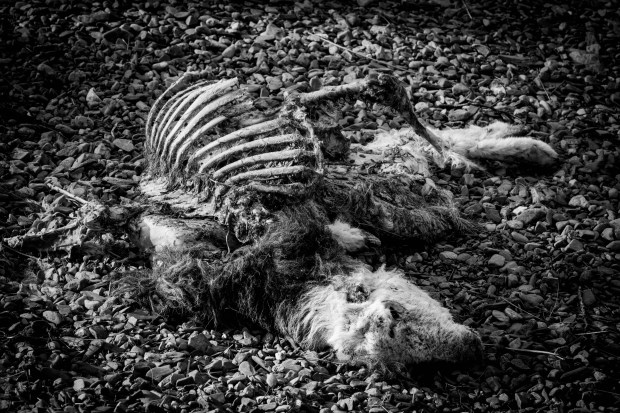
Forensic taphonomy facilities are also spaces that can be used to train students, as well as police victim identification teams and cadaver dogs. Specialist teams gain valuable experience in recognising signs and signatures that are indicative of body disposal or burial, as well as tools to aid in estimating time-since-death of victims. They also provide opportunities for collaboration between researchers, forensic practitioners, and investigative teams. This allows for knowledge exchange and the development of research that is fit for purpose, forensically relevant, and operationally viable.
Final Takeaway Message
Forensic science is underpinned by research that is rigorous and robust. Through knowledge exchange between researchers, these facilities provide an opportunity for methods to be rigorously tested and frameworks validated so they can be operationally sound. Forensic taphonomy facilities, through partnerships and collaboration, make it possible to study the various factors that impact the decomposition process while pushing the boundaries of forensic science. From the studies conducted at these research facilities, we could answer difficult questions in current and cold cases related to the circumstances surrounding the death of the victim. Forensic taphonomy research could one day produce useful insight that can lead to justice for a victim and bring closure to families. The study of the processes that drive decomposition opens a door for the exploration of scientific fact and truth. But it requires grit, curiosity, and, above all, respect for human life, even in death. The resolution of crime is a meticulous process. And so, for justice to prevail, it is the responsibility of scientists to ensure that the methods used and hypotheses proposed meet the same rigour that is demanded of the evidence itself. And despite the advances of the digital age, we must pursue science to honour the dead. And we must honour the dead by pursuing science.
- Putrefaction is the breakdown of the body after death, driven by microbial communities in the gastrointestinal tract and on the skin, through a process called autolysis (self-digestion). It is characterised by the discoloration of the soft tissue, the release of foul odours, as well as the bloating of the body as gases build up in the internal cavity.
About the Author
Cherene de Bruyn is originally from South Africa and is a PGR at Liverpool John Moores University, in the School of Pharmacy and Biomolecular Sciences and the Forensic Research Institute in the UK. With a background in archaeology and physical anthropology, her current research focuses on clandestine grave location using forensic ecology and remote sensing. You can follow her research on LinkedIn. She also dives into all things PhD life and productivity on her Substack called BruynChild (pronounced brainchild).
Discover more from Research Hive
Subscribe to get the latest posts sent to your email.

