Author: Aksam Ssebugwawo // Editor: Erin Pallott
This post is part of a series of work experience projects with T-Level students from The Manchester College. At Research Hive, we have been thrilled to work with young people to produce their first written pieces.
Did you have measles in your childhood?
Measles is one of my childhood diseases. It took advantage of my then weak immune system when I was young. Measles is a highly contagious disease caused by a virus that can lead to severe complications and death. It spreads very easily among vulnerable and unvaccinated people when an infected person breathes, coughs, or sneezes. It was described as early as the 9th century by Persian physician and scholar Abū Bakr Muhammad Zakariyyā Rāzī (also known by the Europeanized name Rhazes). Measles is still common, particularly in parts of Africa, the Middle East and Asia.
Is measles a problem in the UK?
Measles cases in the UK have dropped dramatically over the last few decades, since the introduction of the vaccine. Since 1990, only 0-5 deaths have been recorded annually for measles.
However, in late 2023, there was a measles outbreak which led to the surge in cases confirmed in England, the highest level of cases for more than a decade. In 2026, there have been 736 laboratory-confirmed cases of measles so far in England, compared with 959 cases in the whole of 2025. There has a significant drop in childhood vaccination rates across England since the start of the coronavirus (COVID-19) pandemic.
Short-term effects of measles
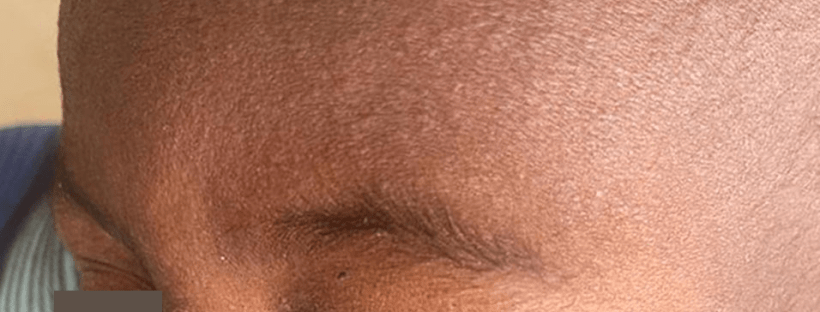
Symptoms usually begin 7-14 days after exposure to the measles virus. Early symptoms like high temperatures, running or blocked nose, a cough and red, sore watery eyes usually last 4-7 days. Tiny white spots may appear inside the mouth 2-3 days after symptoms begin. Measles rash appears 3-5 days after the first symptoms. It usually begins with flat red spots that appear on the face at the hairline. They then spread downward to the neck, trunk, arms, legs, and feet. It usually lasts 5-6 days before fading.
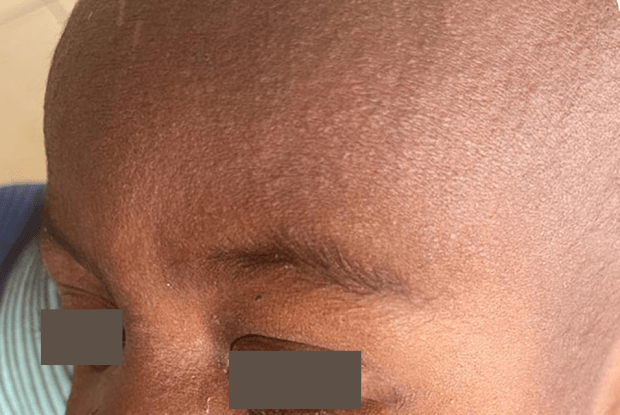
Image Source: CDC/PHIL, ID 31573. Public domain.
Long-term effects of measles.
Immune amnesia
This is where a person develops a strong immunity to the measles virus itself but a increased vulnerability to all other infections.
Subacute sclerosing panencephalitis (SSPE)
This is a rare, non-treatable, and fatal infection which causes damage to the central nervous system, mostly the brain. It has symptoms like dementia, loss of motor control, epilepsy and eventually death. These symptoms commonly manifest within 7-10 years after the initial infection of the measles viral infection. Immunisation against measles is the only known prevention of SSPE.
My version of measles
In my childhood, I was hospitalised a lot as many infections took advantage of my weakened immune system. Measles was among these infections, which I spread to my cousin. At first, when I saw the rash, I thought I had chickenpox as one of my friends had it. He had told me what he went through, and the way it looked on his skin and the subsequent scars scared me. But unlike chickenpox, the measles rash is not itchy and spotty. I was less worried when I was told measles, but I did know about the long-term complications. After some time, I learnt about SSPE, I was scared, stressed and sick that I did an investigation to see if I was at risk.
Do you need to worry about measles?
With the surge of measles cases in England, the most effective way to prevent it is having the MMR (measles, mumps and rubella) vaccine. There is no specific antiviral treatment for measles as it is a viral illness, so it generally needs to run its course. But more serious complications require medical intervention.
It is often a misconception that measles is just a mild childhood illness, causing a bit of a rash and a fever. But measles is one of the most contagious diseases. 9 out of 10 unvaccinated people who comes into contact with the virus will become infected.
Vulnerable people are most at risk. Pregnant women infected with measles may have a miscarriage or the baby may be born prematurely with a low birth weight. Unvaccinated people with weakened immune systems are also at an increased risk. The virus can remain airborne for hours after an infected person has left the room. If vaccination rates continue to drop, outbreaks could become larger, leaving vulnerable people at risk of the short and long-term complications.
Discover more from Research Hive
Subscribe to get the latest posts sent to your email.

